
For a straightforward residential HVAC replacement in Spokane, most homeowners should plan on roughly $4,100 to $9,500 to replace only a furnace or central air conditioner, $8,200 to $16,000 for a matched gas furnace and central AC system, and $9,000 to $18,000 for a complete ducted heat pump installation. Premium variable-capacity systems, dual-fuel equipment, extensive duct changes, or electrical service upgrades can push a project above $20,000. A complete installation with new ductwork can reach $15,000 to $30,000 or more.
Those ranges are useful for budgeting, but they are not interchangeable quotes. The final price depends on what “replacement” actually includes: equipment capacity, efficiency tier, indoor and outdoor components, controls, refrigerant lines, venting, drainage, electrical work, permits, old-equipment removal, commissioning, and warranties. A proposal that omits several of those items may initially look thousands of dollars cheaper, only for the difference to reappear later through exclusions or change orders.
The Short Answer
In 2026, a typical Spokane homeowner replacing a conventional furnace and central AC should budget about $8,200–$16,000 installed. Replacing one component usually begins near $4,100–$4,200 for a qualifying straightforward project and rises with capacity, efficiency, accessibility, and required home modifications. Cold-climate heat pumps and dual-fuel systems generally cost more upfront because they use more sophisticated equipment and may require an air handler, controls, backup heat, or electrical work.
Average HVAC Replacement Cost in Spokane by System Type
The table below reflects complete installed planning ranges for common residential projects. “Installed” means the core equipment, normal labor, removal of the old unit, basic materials, startup, and testing. It does not automatically mean new ductwork, a new electrical panel, structural work, asbestos abatement, or unusual access.
| Replacement project | 2026 Spokane planning range | Most common fit | What can move it higher |
|---|---|---|---|
| Gas furnace only | $4,200–$9,000 | Existing central duct system and usable AC coil | 96%+ AFUE, variable-speed blower, venting or gas-line changes |
| Electric furnace / air handler only | $4,000–$8,500 | Homes without natural gas | Heat-strip capacity, electrical circuits, panel work |
| Central AC only | $4,100–$9,500 | Existing furnace and ductwork remain | Higher SEER2, coil mismatch, line-set replacement, difficult condenser location |
| Gas furnace + central AC | $8,200–$16,000 | Complete conventional heating and cooling replacement | High efficiency, communicating controls, zoning, duct modifications |
| Ducted air-source heat pump | $9,000–$18,000 | One electric system for heating and cooling | Cold-climate model, air handler, backup heat, panel or wiring upgrade |
| Dual-fuel heat pump + gas furnace | $12,000–$22,000 | Heat pump efficiency with gas backup for very cold weather | Premium controls, variable capacity, gas and electrical modifications |
| Single-zone ductless mini split | $4,000–$8,500 | Addition, garage conversion, one difficult room | Long line run, condensate pump, wall access, cold-climate equipment |
| Multi-zone mini split | $9,000–$20,000+ | Homes without ducts or needing room-by-room control | Number of indoor heads, line-hide routing, electrical work, access |
| Full HVAC plus new ductwork | $15,000–$30,000+ | Home without usable ducts or with a failed distribution system | Finished walls, crawlspace access, zoning, returns, code corrections |
These ranges are best used as budgeting benchmarks rather than fixed market prices. A lower estimate may cover only the equipment and basic installation labor, while a higher estimate may include matched indoor and outdoor components, permits, controls, duct corrections, electrical work, commissioning, and longer labor coverage. Compare the complete scope before comparing the final price.
What Does “HVAC Replacement” Actually Mean?
HVAC is a category, not one appliance. In a Spokane home, the system may include a gas furnace, indoor evaporator coil, outdoor AC condenser, heat pump, air handler, thermostat, refrigerant lines, condensate drain, gas piping, venting, electrical disconnects, and supply and return ducts. A “replacement” could mean changing one component or rebuilding nearly the entire comfort system.
One Component
An old furnace is replaced while the AC and ducts remain, or an AC condenser and compatible indoor coil are replaced while the furnace remains. This is usually the least expensive scenario.
Heating and Cooling
The furnace, indoor coil, and outdoor AC are replaced as a tested combination. This costs more today but avoids compatibility problems and duplicated labor later.
New Technology
A furnace and AC become a heat pump, dual-fuel system, or ductless setup. Electrical, controls, drainage, line routing, and backup heat can materially change the scope.
A strong proposal should identify every indoor and outdoor model, the matched-system efficiency rating, labor, permit responsibility, controls, removal, startup procedure, and warranty. If the quote only says “3-ton HVAC system,” it is not detailed enough to compare fairly.
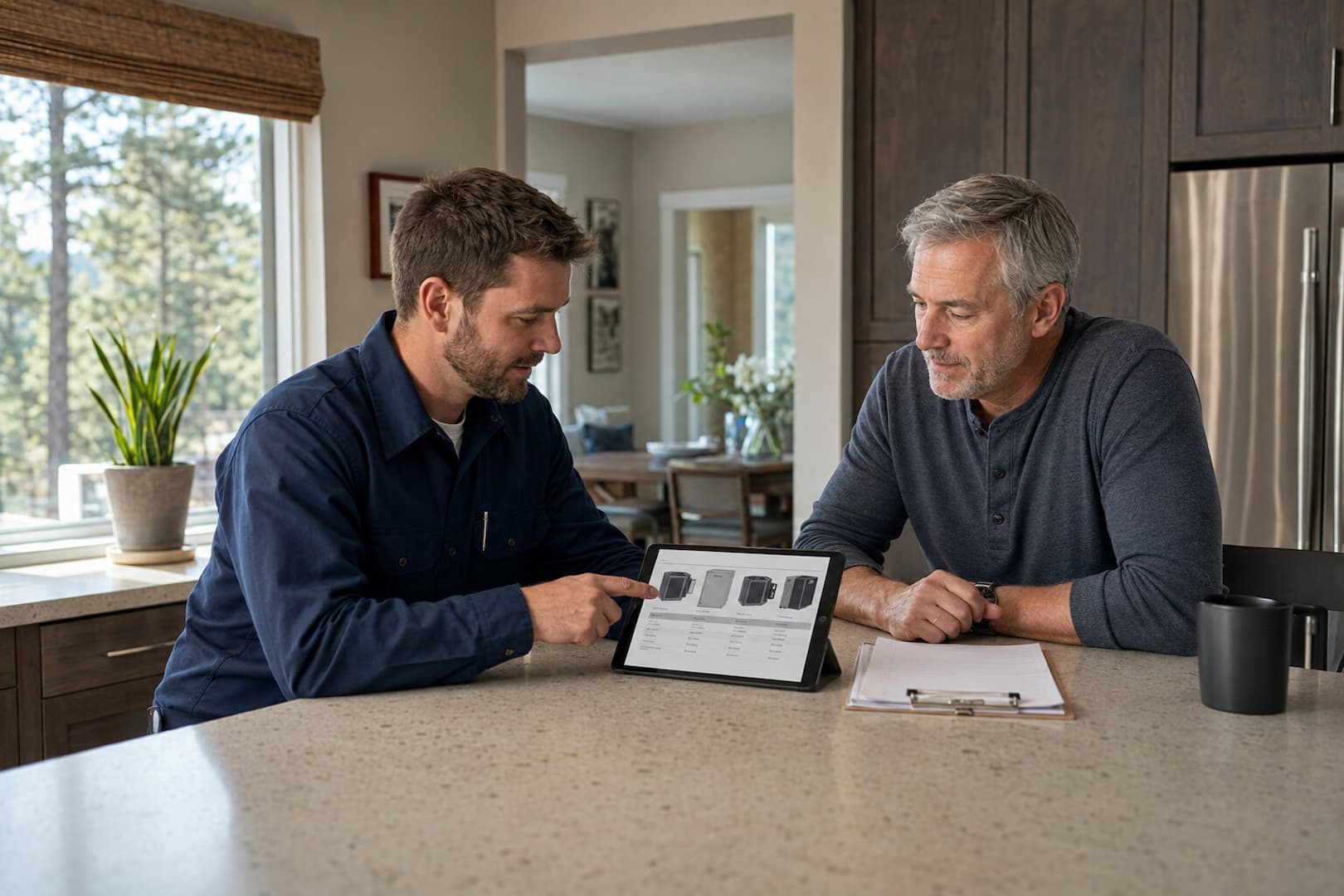
HVAC Replacement Cost by System Type
Central Air Conditioner Replacement: $4,100–$9,500
A central AC replacement commonly includes the outdoor condenser, compatible indoor evaporator coil, refrigerant work, pad or mounting, electrical disconnect connection, condensate work, startup, and removal of the old equipment. A simple replacement is most likely to stay near the lower half of the range when the furnace blower, ducts, refrigerant route, drain, and electrical service are all suitable.
The price rises with equipment capacity, higher SEER2 ratings, two-stage or variable-capacity operation, a new line set, a difficult rooftop or side-yard location, and an indoor coil that cannot be accessed without modifying sheet metal. Homeowners replacing only the cooling side can review the company’s air conditioning installation and replacement service for the typical assessment and installation process.
Gas Furnace Replacement: $4,200–$9,000
A basic furnace changeout can be relatively direct when the replacement has similar dimensions and capacity, the gas line is adequate, the venting is usable, and the existing AC coil can remain. Higher-efficiency condensing furnaces may need PVC intake and exhaust routing, condensate drainage, and changes to the existing flue. Two-stage gas valves and variable-speed blowers also increase equipment and control costs.
Do not choose furnace capacity from square footage alone or simply copy the old nameplate. Insulation, window area, air leakage, ceiling height, orientation, and duct performance all affect heat loss. Master Heating & Cooling’s furnace installation page covers gas, electric, and propane options used in the Spokane area.
Furnace and Central AC Replacement: $8,200–$16,000
This is what many homeowners mean by “full HVAC replacement.” The outdoor AC, indoor coil, furnace, and thermostat are replaced as a matched system. Doing both sides together often costs less than replacing them in separate years because the crew opens the same equipment stack once, fabricates transitions once, pulls permits for one coordinated project, and commissions a factory-matched combination.
The lower end generally represents standard-efficiency equipment with straightforward access and limited modifications. The upper end can include a 96%+ AFUE furnace, higher SEER2 AC, variable-speed blower, communicating thermostat, improved filtration, sheet-metal transitions, return-air corrections, and longer labor coverage.
Ducted Heat Pump Replacement: $9,000–$18,000
A heat pump cools in summer and reverses operation to heat in winter. In Spokane, system selection must account for capacity at low outdoor temperatures—not only the efficiency printed on a brochure. A cold-climate model, properly selected using manufacturer performance data, costs more than an entry-level heat pump but can deliver more usable heating capacity during cold weather.
A conversion may require a compatible air handler or furnace, larger electrical circuits, heat strips or another backup source, a different thermostat, new refrigerant lines, and control wiring. Those additions explain why a heat pump quote may exceed the price of an AC-only replacement. See the local heat pump installation service for system-specific planning.
Dual-Fuel System: $12,000–$22,000
Dual fuel pairs an electric heat pump with a gas furnace. The heat pump handles cooling and much of the heating season; controls switch to the furnace when outdoor conditions or utility economics favor gas. It can be attractive for a Spokane home that already has natural gas and wants heat-pump efficiency without giving up high-output furnace backup.
The project costs more because the homeowner is buying both a heat pump and a furnace plus compatible controls. The value depends on current gas and electric rates, the home’s heat loss, equipment performance at low temperature, and the control balance point. A contractor should explain that operating strategy before asking you to pay for it.
Ductless Mini Split: $4,000–$8,500 for One Zone; $9,000–$20,000+ for Multiple Zones
Ductless systems avoid the cost of building central ducts, but they are not automatically inexpensive. Each indoor head needs a location, refrigerant and control lines, condensate management, electrical power, and an outdoor-unit connection. The number of zones is the biggest cost driver.
A single zone is often sensible for an addition, bonus room, workshop, or area that the main ducts never condition well. A whole-home multi-zone project can exceed the price of central equipment, but it may still be less disruptive than opening finished walls for ductwork. Learn more about ductless mini-split options before comparing per-zone proposals.
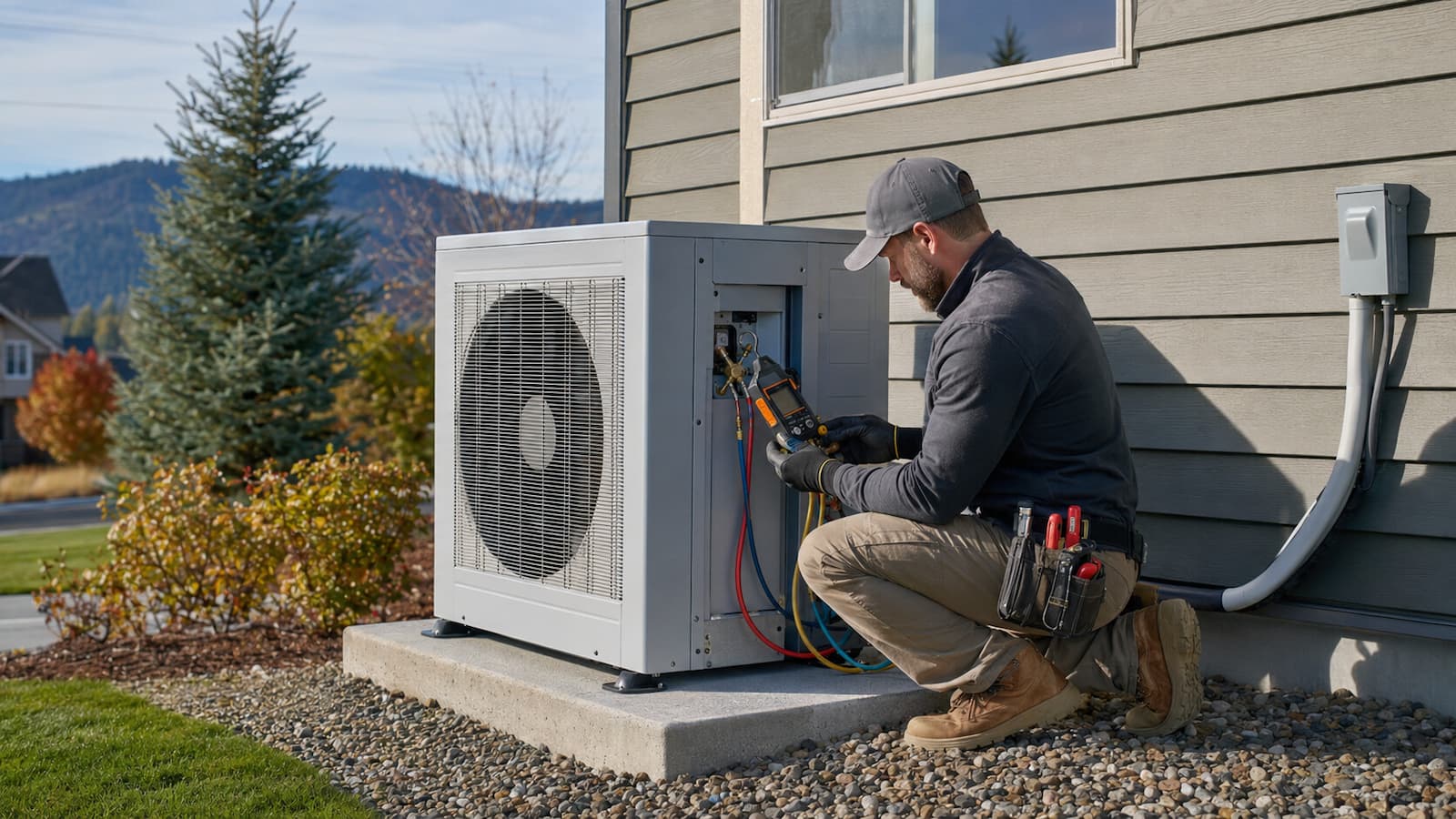
Realistic Spokane HVAC Replacement Examples
These examples show how scope changes the budget. They are not promises of price; they are planning scenarios designed to help a homeowner recognize what belongs in an estimate.
Example 1: Straightforward Furnace Replacement
- 1,500-square-foot home with usable ducts and gas service
- Existing AC remains and is compatible with the new blower
- Standard access, minor sheet-metal transition, no panel work
- Single- or two-stage condensing gas furnace
Example 2: Complete Furnace and AC Replacement
- 1,800–2,200-square-foot home
- Matched furnace, evaporator coil, outdoor AC, and thermostat
- Existing ducts are serviceable but require new transitions and sealing at the equipment
- Normal line-set route and electrical disconnect
Example 3: Cold-Climate Heat Pump Conversion
- Existing central ducts can be reused after airflow corrections
- New heat pump, indoor air handler, controls, and auxiliary heat
- New outdoor circuit and modest electrical modifications
- Higher-efficiency equipment qualifying for a utility incentive
Example 4: Older Home with Major Distribution Work
- New furnace and AC or heat pump
- Undersized return, leaking branches, and inaccessible or damaged ducts
- Electrical, condensate, venting, and code corrections
- Finished areas must be opened and repaired to reach portions of the system
What Determines the Final HVAC Replacement Price?
1. Heating and Cooling Load—Not Square Footage Alone
A larger-capacity system costs more, but oversizing is not an upgrade. Oversized cooling equipment can short-cycle, control humidity poorly, create temperature swings, and operate noisily. Oversized furnaces can also cycle frequently and stress components. The correct starting point is a residential load calculation. ACCA Manual J is the nationally recognized procedure for calculating residential heating and cooling loads.
A proper assessment considers insulation, air leakage, windows, orientation, ceiling height, occupancy, duct location, and Spokane design temperatures. Ask whether the contractor calculated the load or simply copied the capacity of the old system.
2. Efficiency Tier
Cooling efficiency is expressed as SEER2; heat-pump heating efficiency uses HSPF2; furnace efficiency uses AFUE. Higher ratings usually increase equipment cost, but the highest available rating is not automatically the best financial decision. Savings depend on runtime, utility rates, system sizing, duct losses, and how long you expect to own the home.
As a baseline, federal standards that took effect in 2023 require common split-system air conditioners to meet 13.4 SEER2 and split-system heat pumps to meet 14.3 SEER2 and 7.5 HSPF2. Qualifying utility incentives may require higher performance.
3. Single-Stage, Two-Stage, or Variable-Capacity Operation
- Single-stage: lowest upfront price; equipment runs at full output when on.
- Two-stage: better part-load comfort and quieter operation; moderate price premium.
- Variable capacity: adjusts output over a broad range; best comfort and control, highest equipment and control cost.
Premium equipment may require a proprietary communicating thermostat and matched indoor components. Make sure the quote includes those controls and explains replacement cost if the thermostat fails outside warranty.
4. Existing Duct Condition and Airflow
New equipment cannot overcome severely restricted returns, disconnected branches, crushed flex duct, leakage, or inadequate registers. Airflow corrections can add hundreds or thousands of dollars, while a complete duct replacement can add much more. This is one of the most common reasons an online calculator underestimates a real home.
5. Electrical Capacity
An AC-for-AC replacement may reuse an appropriate circuit and disconnect. A heat pump conversion, electric air handler, auxiliary heat kit, or larger equipment may require a new circuit, wire, breaker, subpanel, or service upgrade. The quote should distinguish ordinary HVAC wiring from a major electrical upgrade.
6. Gas Piping, Combustion Air, and Venting
A gas furnace must have adequate fuel supply and safe venting. Moving from an older non-condensing furnace to a high-efficiency condensing model can require new intake and exhaust piping plus condensate drainage. A chimney or shared water-heater vent may also need evaluation when the old furnace is removed.
7. Refrigerant Line Set and Condensate Drainage
Some line sets can be reused if their size, condition, routing, and refrigerant compatibility are acceptable; others should be replaced. Long or concealed runs cost more. Condensate may drain by gravity or require a pump, trap, safety switch, and overflow protection.
8. Access and Installation Difficulty
Attics, tight crawlspaces, steep roofs, finished closets, long carrying routes, and limited side-yard access increase labor. A quote based only on equipment tonnage cannot account for those conditions.
9. Installation Quality and Commissioning
The least visible part of the price is often the most important. Proper installation includes evacuation, refrigerant charging according to manufacturer data, gas-pressure or electric-heat verification, temperature-rise checks, static-pressure measurement, airflow setup, thermostat configuration, safety testing, drain testing, and customer orientation. A cheaper quote that skips commissioning can create years of higher bills and comfort complaints.
10. Warranty and Post-Installation Support
Compare manufacturer parts coverage, compressor or heat-exchanger terms, registration requirements, labor coverage, exclusions, and who handles a warranty claim. A ten-year parts warranty does not automatically pay labor, refrigerant, diagnostics, or after-hours service.
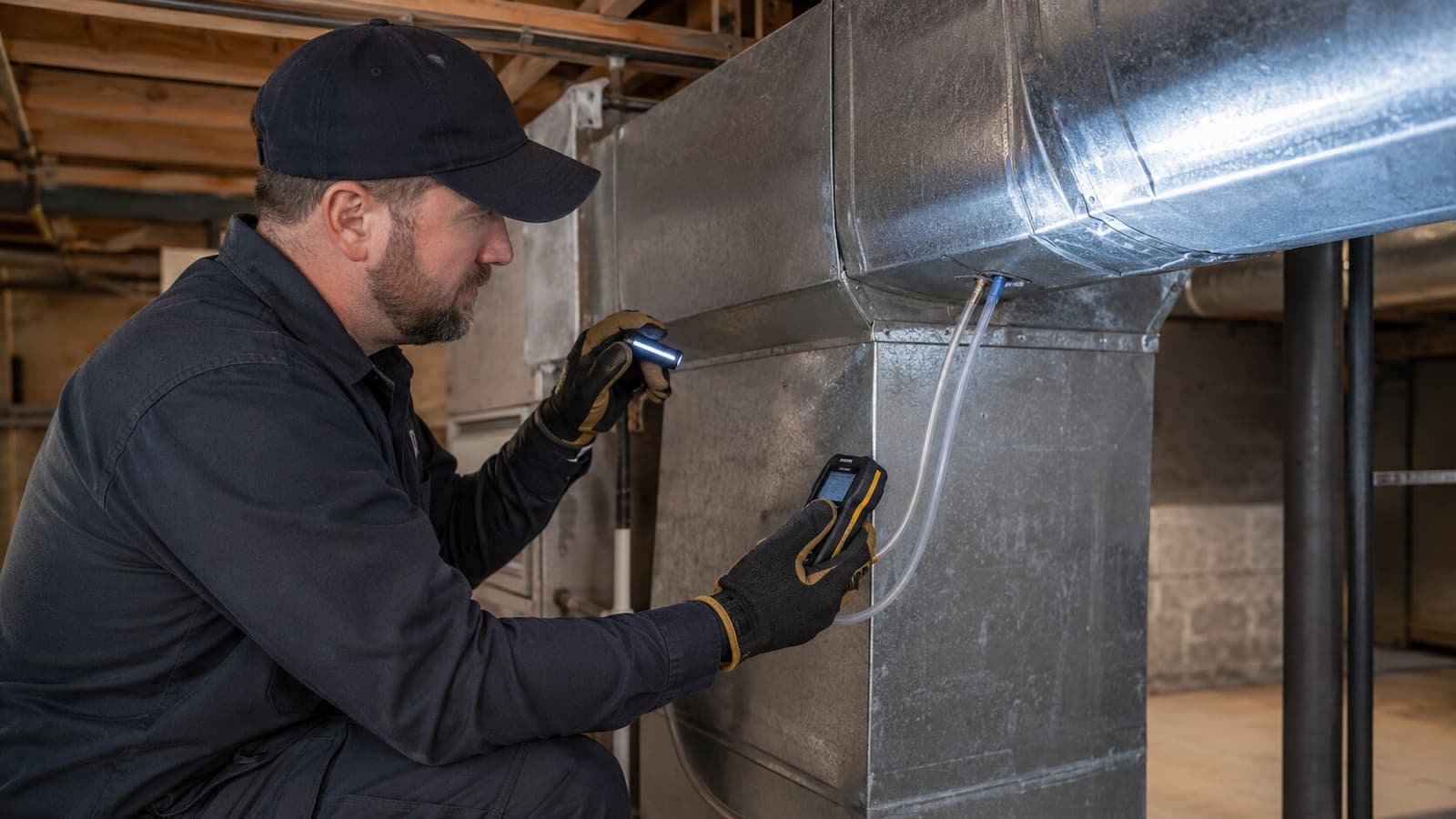
Ductwork, Add-Ons and Hidden HVAC Replacement Costs
| Potential item | Why it may be needed | What to ask |
|---|---|---|
| Return-air enlargement | Existing return cannot deliver required airflow | Was static pressure measured? What return size is required? |
| Duct sealing or repair | Conditioned air is lost to an attic, crawlspace, or basement | Which sections are included and how will leakage be verified? |
| New refrigerant line | Existing line is wrong size, damaged, contaminated, or incompatible | Is the line included, reused, flushed, or excluded? |
| Electrical upgrade | New equipment needs different amperage or additional circuits | Does the quote include breaker, wire, disconnect, and permit? |
| Condensate pump or drain work | Gravity drainage is unavailable or unsafe | Are overflow switches and drain testing included? |
| Gas or vent changes | New furnace has different fuel or combustion requirements | Are gas sizing, combustion air, venting, and startup tests included? |
| Equipment pad or stand | Outdoor unit needs stable, level, code-compliant support | Is a new pad, snow stand, or wall bracket included? |
| Asbestos or hazardous-material work | Some older systems have suspect insulation or materials | Who tests and abates it, and is that work outside the HVAC contract? |
| Drywall or finish repair | Access is needed for ducts, lines, or controls | Who restores walls, paint, ceilings, or landscaping? |
What Is Different About HVAC Replacement in 2026?
Newer Low-GWP Refrigerant Equipment Is Now Common
The federal HFC transition restricted higher-global-warming-potential refrigerants in newly manufactured residential AC and heat-pump equipment beginning in 2025. Most current product lines have moved toward lower-GWP refrigerants such as R-454B or R-32. These systems can have different handling, safety, sensor, and installation requirements, so technicians need the correct training and tools.
In 2026, the EPA also removed the installation deadline for qualifying remaining R-410A components manufactured or imported before January 1, 2025. That means limited legacy inventory may still legally appear in proposals. Ask which refrigerant the quoted system uses, whether indoor and outdoor components are a certified match, and how future service will be supported. Do not compare an older-inventory quote and a current-platform quote by price alone.
The Former Federal $2,000 Heat-Pump Credit Is Not Available for 2026 Installations
This is an important correction to many older HVAC articles. The federal Energy Efficient Home Improvement Credit under Section 25C applies to qualifying property placed in service through December 31, 2025. The IRS states that the credit is not allowed for property placed in service after that date. A contractor should not present the former federal heat-pump credit as a 2026 discount.
Utility and State Programs Still Matter
Although the federal residential credit ended, eligible Spokane-area households may still have access to utility pass-through incentives, state-administered electrification programs, weatherization support, or financing. Eligibility depends on utility service, equipment ratings, income rules, participating contractors or distributors, and available funding.
HVAC Rebates and Financing in Spokane for 2026
Avista HVAC Incentives
Avista’s current Washington midstream program lists pass-through incentives for qualifying equipment purchased through participating distribution channels. As of this guide’s July 2026 review:
- Qualifying air-source heat pumps may receive $300, $400, or $600 per outdoor system, depending on SEER2 and HSPF2 tier.
- Qualifying residential retrofit mini- or multi-split heat pumps may receive $300–$600.
- Qualifying condensing natural-gas furnaces rated at least 90% AFUE list a $650 Washington incentive.
These are contractor/distributor pass-through incentives, not automatic cash payments for every installation. Equipment must use Avista electric or natural-gas service, and DIY installations are not eligible. Ask the contractor to identify the exact eligible model, incentive amount, and whether it is already reflected in the quoted price.
Washington HEAR Programs
Washington’s State Home Electrification and Appliance Rebates program funds third-party administrators that offer incentives for high-efficiency electric equipment. Eligible categories include ducted and ductless heat pumps plus electrical panel and wiring upgrades required for new electric equipment. General state eligibility includes qualifying households at or below 150% of area median income, but individual administrators may use narrower requirements and funding may vary by community.
Energy-Efficiency Financing
Avista also describes zero-down, low-interest financing for eligible Washington residential and small-business customers through a lending partner, with qualifying payments added to the utility bill. Loan approval, rate, project eligibility, fees, and terms must be confirmed directly before using a monthly payment to compare HVAC proposals.
Do You Need a Permit for HVAC Replacement in Spokane?
Yes, HVAC replacement normally requires mechanical permitting, and electrical or gas-related scope can add corresponding permit items. The City of Spokane states that mechanical permits are required for installations or modifications to heating, ventilation, air-conditioning equipment, and gas piping.
The city’s 2026 fee schedule lists a $65 processing/application fee, a 2.5% technology fee, $23.80 for a heat pump, compressor, or AC under 15 tons, $17.60 for heating equipment up to 100,000 BTU, $26 for larger heating equipment, $17.60 for an air handler, and itemized charges for ductwork, gas outlets, and applicable electrical circuits. Your total depends on the exact system and jurisdiction.
Homes inside the City of Spokane, Spokane Valley, and unincorporated Spokane County may use different permitting authorities and fee schedules. The proposal should identify who pulls the permit, who pays the fee, and who schedules and resolves the final inspection.
Should You Repair or Replace Your HVAC System?
Age alone does not decide the answer. A ten-year-old system with a failed capacitor and good overall condition may be worth repairing. A fifteen-year-old system with compressor failure, refrigerant leakage, poor airflow, and rising operating cost may not be. The decision should compare the complete repair cost, likely remaining life, comfort performance, efficiency, warranty status, and replacement cost.
Repair Is Often Reasonable When
- The failure is isolated and relatively inexpensive
- The system has been reliable and maintained
- Major components remain in good condition
- The repair restores safe, expected performance
- Replacement would not solve a separate duct or insulation problem
Replacement Deserves Consideration When
- Multiple major repairs have occurred recently
- A compressor or heat exchanger has failed outside warranty
- The system is poorly sized or cannot heat or cool evenly
- Compatible components or refrigerant are difficult to obtain
- Repair cost is large relative to a properly scoped replacement
Ask for Both Numbers When
- The equipment is near the end of normal service life
- A repair may expose another weak component
- Only one half of a matched system has failed
- You are considering a heat pump or fuel change
- Available incentives could change the net price
If you need a diagnosis before deciding, start with professional HVAC repair in Spokane. A replacement estimate should not be used to avoid diagnosing a repairable problem.
Should You Replace the Furnace and AC Together?
Replacing both together often makes sense when both components are similar in age, the indoor coil must be changed, the old furnace blower is not compatible with the new cooling system, or you want a verified matched efficiency rating. It can reduce duplicated labor and avoid opening the same equipment stack twice.
Replacing only one component may still be sensible when the other is newer, in good condition, correctly sized, compatible with the new equipment, and supported by parts and refrigerant availability. Ask the contractor to document compatibility and explain how keeping the older component affects efficiency, warranty, controls, and expected replacement timing.
How to Compare HVAC Replacement Quotes Correctly
Do not compare only the total or monthly payment. Normalize every quote to the same scope:
Red Flags in a Very Low Estimate
- No indoor or outdoor model numbers
- No load calculation or explanation of capacity
- No permit responsibility
- Reusing the old coil without documented compatibility
- No discussion of ducts, electrical capacity, gas venting, or drainage
- An efficiency claim without an AHRI-matched system
- “Ten-year warranty” with no explanation of labor exclusions
- A monthly payment emphasized while total financed cost is difficult to find
How to Reduce HVAC Replacement Cost Without Buying the Wrong System
- Replace before an emergency: planned spring or fall work gives more time to compare complete proposals and equipment availability.
- Request a right-sized system: paying for excess capacity does not improve comfort.
- Compare lifecycle value: consider expected utility use, warranty, maintenance, repairability, and how long you plan to stay.
- Verify incentives before ordering: the exact model combination and purchase channel may determine eligibility.
- Bundle sensible work: replacing matched heating and cooling components together can avoid duplicated labor.
- Fix critical ducts, not every duct automatically: use measurements to prioritize return restrictions, leakage, and damaged sections.
- Keep the system maintained: professional HVAC maintenance, filter changes, and clean outdoor equipment help protect performance and warranty compliance.
The goal is not to buy the cheapest box. It is to buy the least expensive complete solution that safely meets the home’s heating, cooling, airflow, and reliability requirements.
How Long Does HVAC Replacement Take?
A straightforward furnace or AC changeout often takes one working day. A complete furnace-and-AC replacement commonly takes one to two days. Heat pump conversions, dual-fuel systems, multi-zone mini splits, electrical upgrades, or significant ductwork can take several days.
The project timeline should include more than installation hours:
- In-home assessment and load calculation
- Equipment selection and availability confirmation
- Permit application and scheduling
- Old-equipment removal and site preparation
- Mechanical, refrigerant, electrical, gas, drain, and control work
- Startup, commissioning, and homeowner walkthrough
- Required inspection and correction of any noted items
- Warranty registration and final documentation
Frequently Asked Questions About HVAC Replacement Cost in Spokane
How much does a complete HVAC replacement cost in Spokane?
A conventional matched gas furnace and central AC replacement typically falls around $8,200–$16,000 in 2026. Straightforward promotional projects may begin lower, while premium equipment, duct changes, electrical work, zoning, or difficult access can move the total above that range.
How much does it cost to replace only a furnace?
Plan on roughly $4,200–$9,000 for most installed gas-furnace replacements in Spokane. Capacity, AFUE, staging, blower type, venting, gas piping, sheet-metal transitions, and compatibility with the existing AC determine the final price.
How much does central AC replacement cost?
A typical installed central AC replacement is about $4,100–$9,500. Higher SEER2 equipment, a new indoor coil, long refrigerant lines, difficult condenser placement, electrical changes, or duct corrections can increase the total.
How much does a heat pump cost in Spokane?
Most complete ducted heat-pump projects should be budgeted around $9,000–$18,000. A simple AC-to-heat-pump swap using suitable existing ducts and electrical infrastructure may cost less; cold-climate, variable-capacity, dual-fuel, or electrically complex installations may cost more.
Can I replace the outdoor AC without replacing the furnace?
Often yes, if the furnace blower, indoor coil, controls, and airflow are compatible and in good condition. The contractor should document the matched components and explain any effect on rated efficiency and warranty.
Does a new HVAC system include ductwork?
Usually not beyond the sheet-metal transitions needed to connect new equipment. Branch repairs, sealing, additional returns, zoning, balancing, or full duct replacement should be listed separately unless the contract explicitly includes them.
Are HVAC permits included in the quote?
They should be clearly identified, but inclusion varies by contractor. Ask who pulls the mechanical and any required electrical permits, who pays the fees, and who schedules the final inspection.
Is there a federal heat-pump tax credit in 2026?
No. The IRS states that the Energy Efficient Home Improvement Credit is not allowed for qualifying property placed in service after December 31, 2025. Utility or state programs may still be available, but they have separate requirements.
What Avista HVAC rebates may be available?
As of July 2026, Avista lists Washington pass-through incentives of $300–$600 for qualifying air-source heat pumps and $650 for qualifying condensing natural-gas furnaces. Eligibility depends on service territory, equipment efficiency, project type, and participating distribution channels. Confirm the exact amount before ordering.
Is the cheapest HVAC quote usually the best value?
Not necessarily. A lower quote may exclude permits, coil replacement, line-set work, duct corrections, electrical upgrades, startup measurements, or labor warranty. Compare model numbers and complete scope before comparing totals.
Will a more efficient system always pay for itself?
No. Payback depends on the price premium, utility rates, runtime, existing equipment efficiency, duct losses, home envelope, and ownership period. Higher efficiency may still be worthwhile for comfort, sound, capacity control, or incentives even when simple energy payback is long.
Can an HVAC replacement be completed in one day?
Many straightforward furnace-only, AC-only, or matched-system replacements can be completed in one day, but complex access, conversions, electrical work, duct modifications, or multi-zone systems may require additional time. Final inspection can occur after installation.