Immediate hazard
Do not troubleshoot or re-enter for the equipment.
- Gas odor or suspected gas release
- Smoke, fire or visible arcing
- Carbon monoxide alarm
- Severe electrical burning odor

When the system stops, the first decision is whether the situation is hazardous, urgent or safe to schedule. We route the call, test the equipment and explain the repair before approved work begins.
Leave the area. From a safe location, call 911 or the appropriate utility emergency line. Do not wait inside for an HVAC appointment.
Call 911The word “emergency” covers very different situations. Sorting them correctly protects the household and helps the scheduling team send the right response.
Do not troubleshoot or re-enter for the equipment.
Call (509) 300-1111 to confirm the current response window.
Stop the affected equipment when continued operation may cause damage.
No heat, delayed ignition, shutdowns, blower trouble, venting or safety-control faults.
Furnace repair detailsWarm air, frozen coil, electrical faults, condensate trouble or a system that will not start.
AC repair detailsHeating or cooling loss, icing, defrost behavior, reversing, sensors, airflow or refrigerant-system concerns.
Heat pump service detailsOne zone down, error codes, leaking indoor heads, communication faults or shared outdoor-unit problems.
Mini-split repair detailsBlank display, incorrect readings, schedule trouble, wiring faults or system communication errors.
Weak vents, hot or cold rooms, filter and blower restrictions, duct leakage or return-air limitations.
A system that runs without heating or cooling may have a control fault, airflow restriction, failed motor, combustion problem, refrigerant issue or loss of power to part of the equipment. Replacing the “usual” part without proving the failure can leave the original problem untouched.
Testing follows the operating sequence and the systems connected to the complaint. That approach is especially important when one failure can stress another component.
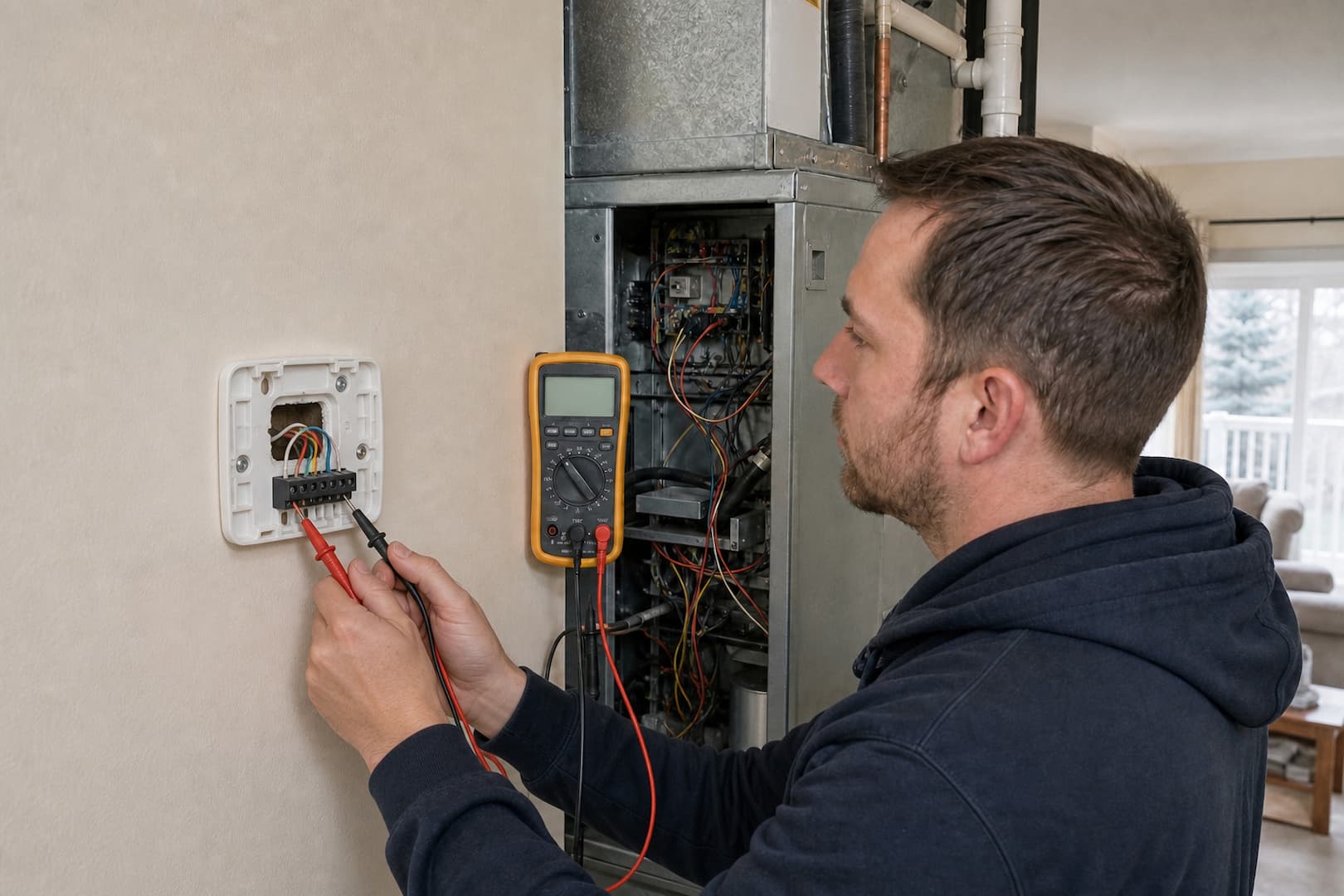
Disconnects, breakers, low-voltage calls, safeties, boards, wiring and sensors.
Filters, blower, coil condition, supply and return paths and duct restrictions.
Ignition, flame proving, burners, venting, pressure switches and limit controls.
Contactors, capacitors, motors, compressors, temperatures and refrigerant-system behavior.
Condensate pans, traps, lines, pumps, float switches and water near equipment.
Thermostat, indoor unit, outdoor unit, zones and accessories that share operation.
Confirm safety, urgency, address, equipment and current symptoms.
Review history and observe the failure when conditions allow.
Measure the relevant sequence instead of relying on the symptom alone.
Explain findings, repair scope, price and any condition that limits the result.
Complete approved work and test normal operation before handoff.
The symptom does not set the price. “No cooling” can come from a control component or a compressor. “No heat” can involve a thermostat signal or the furnace combustion sequence. Diagnosis establishes the repair scope.
Gas odor, smoke, fire and a carbon monoxide alarm require evacuation and the appropriate emergency or utility service. Urgent HVAC failures also include loss of primary heat in dangerous cold, electrical overheating, active water near electrical parts and no cooling for a medically vulnerable household.
Call (509) 300-1111 to confirm the current response window. Urgent requests are prioritized according to safety, weather, location, technician availability and the system involved. We do not recommend delaying emergency or utility services for gas, fire or carbon monoxide hazards.
Share the address, system type, thermostat display or error code, when the failure began, any odors, water, ice or breaker activity, and whether anyone in the home has a temperature-related health concern.
Similar symptoms can have different causes, so a reliable price follows diagnosis. The technician tests the system, explains the failed condition and reviews the proposed repair and price before approved work begins.
Yes. The HVAC repair page covers system-level routing and diagnostics. Equipment-specific pages provide more detail for furnace repair, central AC repair, heat-pump service and mini-split repair.
Compare the current failure, safety and condition, age, repair history, parts support, efficiency, comfort and the cost of a properly scoped replacement. A large repair is not automatically a replacement decision, and an inexpensive repair does not correct a fundamentally poor system design.
Include the system type, error code, current indoor condition and anything you noticed before the failure. For an urgent no-heat or no-cooling situation, call to confirm the current response window.
Send the service details below. If the situation is urgent, call (509) 300-1111 after submitting.