Central Air Conditioning
Whole-home cooling through existing ductwork. This is often the direct route when the furnace, blower and ducts can support the new cooling equipment.

A good air conditioner should fit the house, the ductwork and the indoor equipment already there. MASTER Heating & Cooling plans central AC installations and replacements around those details, then tests the complete system before handoff.
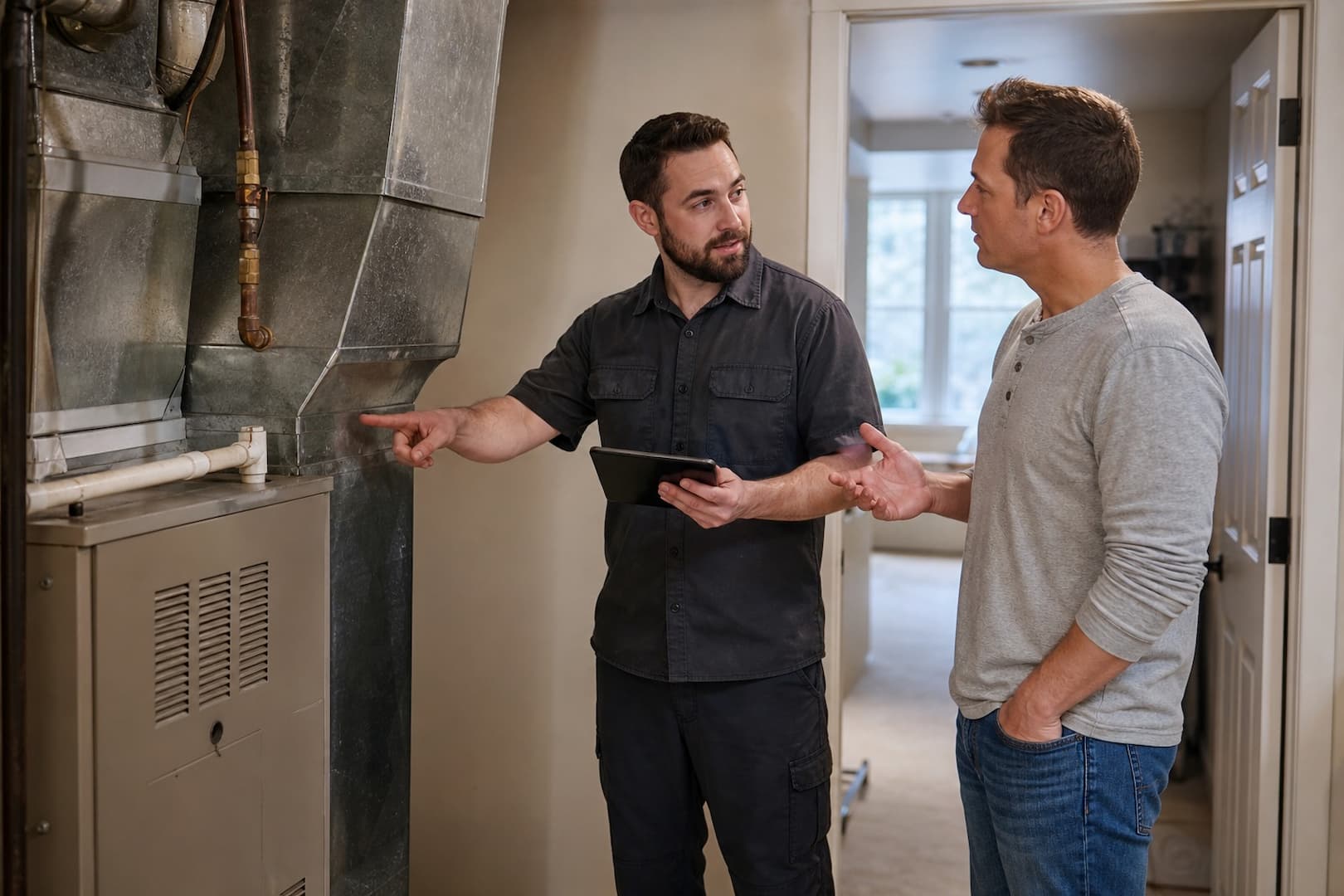
Replacing the outdoor unit is only one part of the project. The indoor coil, furnace or air handler, blower performance, refrigerant path, drainage and controls have to work as one system. A first-time central AC installation may also involve new electrical work and a different route for the line set.
During the estimate, tell us which rooms fall behind, whether the house has had additions, and what you disliked about the old system. Those details matter. Sometimes a capacity change is justified; sometimes the real issue is airflow or distribution.
The best option depends on the infrastructure you already own and the problem you are trying to solve. We compare the practical paths instead of forcing every home into the same package.
Home size matters, but so do insulation, windows, orientation, air leakage and internal heat gain.
The blower and duct system need to move the required air without creating objectionable noise or pressure.
The outdoor unit, indoor coil, metering components and controls must be compatible as a complete system.
Drainage, refrigerant setup, electrical protection, line routing and startup measurements all affect the result.
A bigger unit is not automatically a better unit. Oversizing can produce short cycles, uneven temperatures and poor moisture control. The recommendation should follow the home, not the largest cabinet that fits.
We discuss comfort problems, inspect the existing equipment and note access or infrastructure constraints.
You receive the recommended system, included work, options and price before equipment is ordered.
Equipment, materials and the installation plan are coordinated for the scheduled day.
The old equipment is removed where applicable, the new system is set, connected and prepared for startup.
Controls, drainage, airflow and cooling operation are checked. We show you how to use the system before leaving.
Online averages rarely describe a specific house. The useful number is the price for equipment that fits the home and the work required to install it correctly.
Look beyond the equipment name. A proposal should identify the scope, what will be reused, what will be replaced, how the old equipment is handled, the planned controls, startup testing and warranty terms.
Rebates and incentives can change. If a current program applies to the proposed equipment, confirm the eligibility rules and paperwork before treating it as part of the budget.
Plan My InstallationThe answer comes from the home, not from a rule based on square footage alone. Layout, insulation, window exposure, duct condition, existing indoor equipment and the way the rooms gain heat all affect capacity. We review those inputs before recommending equipment.
Often, yes. The furnace blower, available space, electrical service, ductwork and controls still need to be checked. If the existing equipment cannot support the selected cooling coil or airflow, the estimate should explain the needed changes.
Not automatically. A coordinated replacement may make sense when both systems are aging, compatibility is limited or access makes two separate projects inefficient. If the furnace is sound and compatible, an AC-only project may be the better use of the budget.
A useful estimate identifies the proposed equipment, the installation scope, electrical or duct modifications, controls, removal of old equipment, startup testing, warranty information and any conditions that could change the price.
A straightforward replacement is commonly completed in a day, but access, electrical work, duct changes or a first-time central AC installation can add time. We set the expected schedule after seeing the home.
MASTER Heating & Cooling installs central air conditioners, heat pumps and ductless equipment. The right path depends on whether the home has usable ductwork, how many areas need conditioning and whether the project should also address heating.
Tell us about the existing system, the rooms that need better cooling and what you want the new equipment to accomplish.
Complete the form and our team will follow up to arrange the next step.