Seasonal heating and cooling care

HVAC Maintenance & Tune-Up in Spokane, WA

Maintenance is the planned visit between “everything seems fine” and an avoidable shutdown. We check condition, airflow, controls, drainage and the operating sequence that fits your furnace, AC or heat-pump system.

  • Heating and cooling maintenance
  • System-specific checklist
  • Condition and safety findings
  • Clear follow-up priorities
The Spokane service year

Prepare Before the Long Run

The most useful time to check a system is before it carries the season's heaviest load. That makes heating and cooling separate maintenance moments, even when both share a blower and thermostat.

Heating-season visit

Focus on the equipment and safeguards that will run through Spokane's cold months.

  • Thermostat call and heating sequence
  • Filters, blower and delivery airflow
  • Furnace ignition, combustion safeguards and venting where applicable
  • Heat-pump heating and defrost-related operation
  • Backup heat and changeover controls where installed
One home · two peak seasons

Cooling-season visit

Prepare heat-transfer surfaces, drainage and electrical components for sustained cooling.

  • Thermostat call and cooling sequence
  • Indoor and outdoor coil condition
  • Blower, outdoor fan and airflow
  • Condensate pan, drain, pump and safeties
  • Electrical components and operating measurements
Match the checklist to the equipment

HVAC Maintenance Is Not One Generic Tune-Up

Furnace

Ignition, flame proving, burners, venting, blower, temperature limits, controls and accessible combustion-related condition.

Furnace maintenance should go deeper when the heating equipment needs its own landing page.

Central AC

Indoor and outdoor coils, drainage, blower airflow, electrical components, temperatures, controls and outdoor clearances.

AC maintenance supports homeowners looking for a cooling-only tune-up.

Heat pump

Heating and cooling modes, outdoor coil, defrost-related behavior, reversing controls, backup heat, airflow and drainage.

Year-round use means the maintenance schedule should reflect total run time.

Ductless mini-split

Every indoor head, filter, coil, blower and drain plus shared outdoor equipment, communication and zone response.

Mini-split maintenance covers the full multi-zone checklist.

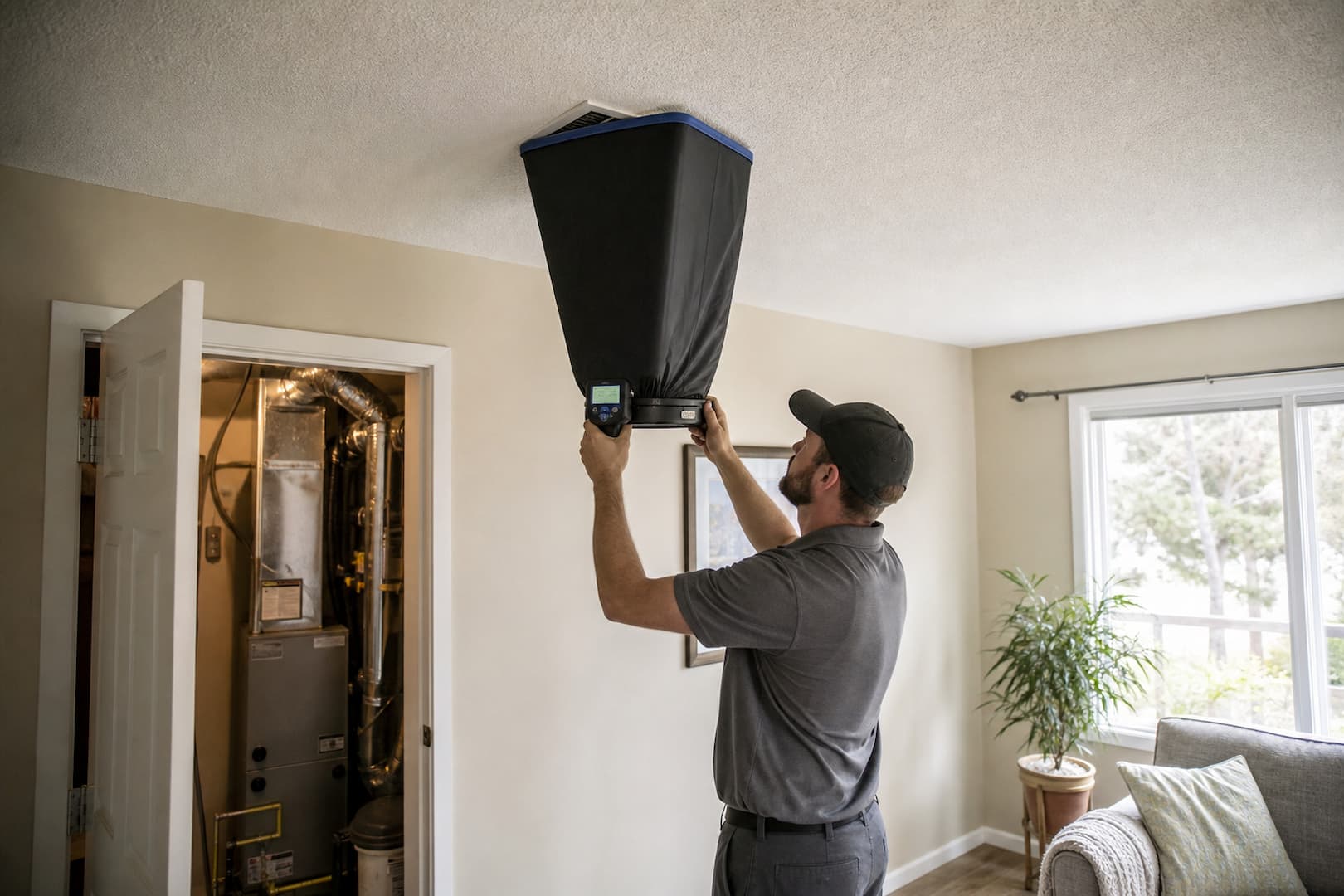
Technician measuring residential HVAC airflow during seasonal maintenance
Four layers of a useful visit

Look, Clean, Measure, Explain

A maintenance visit should go beyond a filter change without pretending that every component needs disassembly. The checklist follows the system and accessible service points.

Condition

Visible wear, debris, corrosion, leaks, mounting, clearances and signs of overheating or water.

Air and water paths

Filters, coils, blower, ducts, drains, traps, pumps and outdoor airflow.

Operating sequence

Thermostat calls, controls, motors, safeties and equipment response in available modes.

Findings

What is normal, what needs watching and what requires repair rather than routine care.

Reasons to schedule sooner

Maintenance Signals That Should Not Be Ignored

01 AIRFLOW

Rooms or vents changed

Gradual restriction, filter loading, blower condition or a duct issue may be developing.

02 CYCLING

Runs changed length

Frequent starts, unusually long operation or failure to reach setpoint deserves attention.

03 DRAINAGE

Water or musty odor

Condensate should leave the system without backing up or wetting nearby finishes.

04 ENERGY

Usage changed unexpectedly

Weather and rates matter, but a system-condition change can also increase run time.

Maintenance has a boundary. A gas odor, carbon monoxide alarm, smoke, repeated breaker trip, active leak near electricity or a system that no longer heats or cools calls for HVAC repair, not a routine tune-up.

Maintenance Supports Better Decisions

1

Readiness

Confirm the system can enter the heavy season without an obvious condition being overlooked.

2

Priority

Separate routine wear from a repair that affects safety, reliability or water control.

3

Baseline

Create a record that makes future changes in airflow, sound, operation or readings easier to recognize.

4

Planning

Identify aging or unsupported components early enough to compare repair and replacement without a rushed decision.

Seasonal service questions

HVAC Maintenance FAQ

How often should HVAC maintenance be scheduled?

Most homes benefit from heating service before the heavy winter run and cooling service before summer. Heat pumps used year-round may need a schedule based on total operating hours. Follow manufacturer and warranty guidance for the installed equipment.

Is an HVAC tune-up the same as repair?

No. Maintenance checks routine condition and operation on equipment that is generally working. An active failure, error code, repeated breaker trip, gas odor, water near electrical parts or loss of heating and cooling requires diagnosis and repair.

What is included in HVAC maintenance?

The checklist depends on the system. It can include accessible cleaning and inspection, filters, airflow, electrical connections and components, thermostat operation, condensate drainage, combustion and venting checks for furnaces, and heating/cooling performance.

Can maintenance lower energy bills?

Correcting dirty filters, restricted coils, control issues or improper settings can reduce avoidable waste, but no tune-up can promise a specific savings amount. Weather, rates, home envelope, occupancy and equipment efficiency still drive energy use.

Does HVAC maintenance prevent every breakdown?

No. It can identify wear, unsafe conditions and developing problems, but components can still fail between visits. Maintenance gives you a condition record and a chance to act before some issues become a shutdown.

Should a new HVAC system be maintained?

Yes. New equipment still collects debris, drains condensate, cycles electrical components and depends on correct airflow. Routine service also creates documentation that may matter under manufacturer warranty terms.

Schedule seasonal service

Set Up HVAC Maintenance Before the Peak Season

Tell us which heating and cooling equipment serves the home, how old it is and when it was last professionally maintained.

  • System-specific heating or cooling checklist
  • Condition, operation and airflow review
  • Clear record of findings and follow-up priorities

Request HVAC Maintenance

Complete the form and our team will contact you about scheduling.

Get Quote