Natural Gas Furnace
Common in ducted Spokane homes. The project includes combustion air, gas piping, venting, condensate where applicable, electrical, controls and airflow.

A new furnace should solve more than the latest breakdown. We review the home, heating load, airflow, venting and the equipment that must work with it, then build a clear installation scope.
A furnace can be old and still repairable. It can also be relatively young but poorly matched to the home. The replacement conversation should separate the immediate failure from the underlying comfort and safety picture.
Common in ducted Spokane homes. The project includes combustion air, gas piping, venting, condensate where applicable, electrical, controls and airflow.
Higher AFUE equipment commonly uses sealed combustion, PVC venting and condensate drainage. Those changes can affect placement and project cost.
No combustion vent is required, but electrical capacity and operating cost matter. In some homes, a heat pump deserves comparison before choosing electric resistance heat alone.
Two homes with the same floor area can lose heat very differently. The equipment choice should account for the envelope, layout and air-distribution system.
Attic, walls, penetrations and uncontrolled outdoor air affect heat loss.
Window area, type and orientation change how quickly rooms cool.
Open areas, additions, high ceilings and multiple floors shift the load.
Capacity is not useful if the ducts cannot deliver and return air without restriction.
Rooms that were always cold may reveal distribution problems a larger furnace will not solve.
Oversized equipment can still leave a home uncomfortable. Fast, short cycles may heat the thermostat area before distant rooms catch up.
Set floor protection and prepare a safe work path.
Disconnect and take out the old furnace where applicable.
Build required duct transitions, venting and drainage.
Complete fuel or electrical, control and thermostat work.
Run the furnace through the operating sequence.
Review controls, filter access and warranty information.
Startup testing confirms that the installed furnace operates as a system. The exact checks vary by equipment, but the goal is the same: verify the sequence, controls, airflow and safe operation before the home depends on it during cold weather.
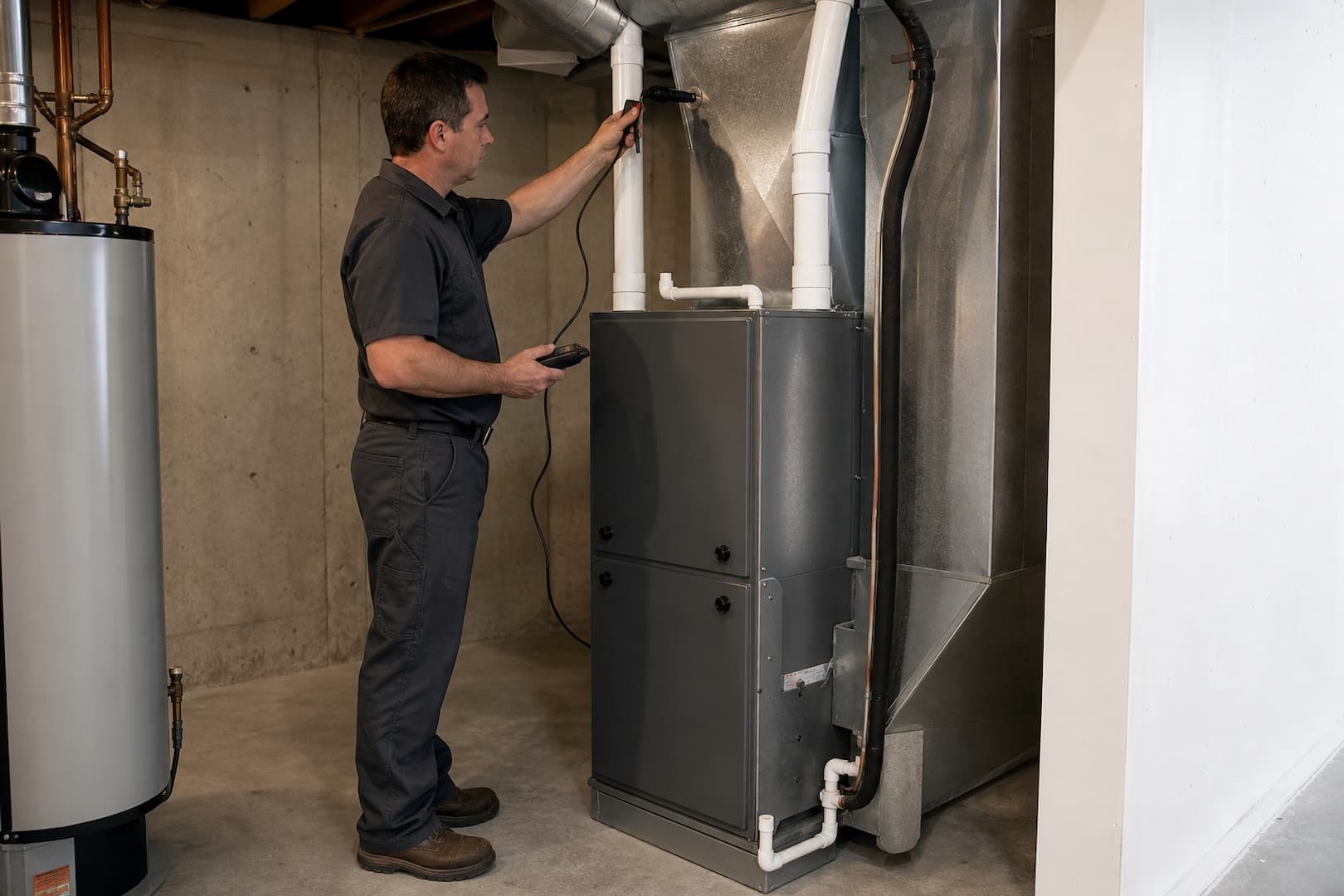
Capacity, blower type, efficiency level, venting category and controls.
How the new cabinet fits the supply, return, filter and existing cooling coil.
Gas piping, electrical work, flue changes, combustion air and condensate routing.
Stairs, tight utility rooms, AC coil changes, thermostat work and removal logistics.
If the AC is also near replacement, coordinating the indoor coil, blower and controls can reduce repeated work. A matched furnace-and-AC project is not mandatory, but it deserves comparison.
AC installation details →A heat pump can provide cooling and carry much of the heating load, while a furnace may remain as backup in a dual-fuel system. The home, electrical service and operating goals decide whether that path fits.
Heat pump installation →Furnace capacity should follow a heating-load assessment that considers the home, insulation, windows, air leakage, layout and Spokane winter conditions. The old furnace size is useful context, but it is not proof that the same capacity is right.
Many straightforward replacements are completed in one working day. Venting changes, difficult access, electrical or gas modifications, duct transitions and paired AC work can extend the schedule. The written scope should set expectations.
The answer depends on venting, installation cost, fuel use, comfort goals and how long you expect to keep the home. A high-efficiency furnace changes the venting and condensate requirements, so the comparison must include installation scope, not only the AFUE rating.
Possibly. The blower, controls, coil configuration and equipment compatibility need to be checked. If the existing AC is near replacement or the indoor coil must change, comparing a matched project may avoid duplicated work.
The proposal should identify the equipment, removal of the old unit, duct transitions, venting and condensate work, fuel or electrical connections, thermostat scope, startup testing, cleanup and warranty terms.
Yes. MASTER Heating & Cooling offers free estimates for new-system projects. The visit is used to review the home, current equipment and project constraints before a written recommendation is prepared.
Tell us about the current furnace, comfort problems and any upcoming changes to the home or cooling system.
Complete the form and our team will contact you to arrange the in-home review.