Furnace and central AC
A familiar matched system with shared blower and ducts. Indoor coil, furnace airflow, venting and controls must be compatible.
Furnace installation · AC installation
Replacing one box can affect the entire heating and cooling system. We plan furnaces, central AC, heat pumps and ductless equipment around the home's loads, airflow, controls, utilities and the components that must work together.
A familiar matched system with shared blower and ducts. Indoor coil, furnace airflow, venting and controls must be compatible.
Furnace installation · AC installationOne refrigeration system heats and cools through the ducts. Low-temperature capacity, backup heat and electrical scope need definition.
Heat pump installationA heat pump handles much of the year while a compatible furnace provides a planned backup path below the selected changeover point.
Room-by-room equipment can serve homes without usable ducts, additions or selected problem areas alongside an existing central system.
Mini-split installationThe model number belongs at the end of the reasoning, not the beginning.
Home size, envelope, windows, orientation, occupancy and Spokane design conditions.
Supply and return capacity, static pressure, room distribution, filtration and blower requirements.
Indoor and outdoor compatibility, controls, venting, refrigerant and future service support.
Gas, electrical circuits, panel capacity, disconnects, condensate and exhaust paths.
Hot and cold rooms, humidity, noise, cycling, operating cost and planned remodels.
A full HVAC replacement is not automatically better than a focused one. The practical choice depends on condition and compatibility. A sound furnace may support a new AC; an aging furnace with an incompatible blower may not. A heat-pump conversion can change both the indoor equipment and electrical scope.
We identify the role of each existing component so you can compare a smaller project with a coordinated replacement on equal terms.
Components that are sound, compatible, supported and able to meet the planned operating conditions.
Duct transitions, return air, drainage, venting, controls or circuits that can be corrected without wholesale replacement.
Equipment that is failed, unsupported, mismatched or likely to compromise the new system's performance.
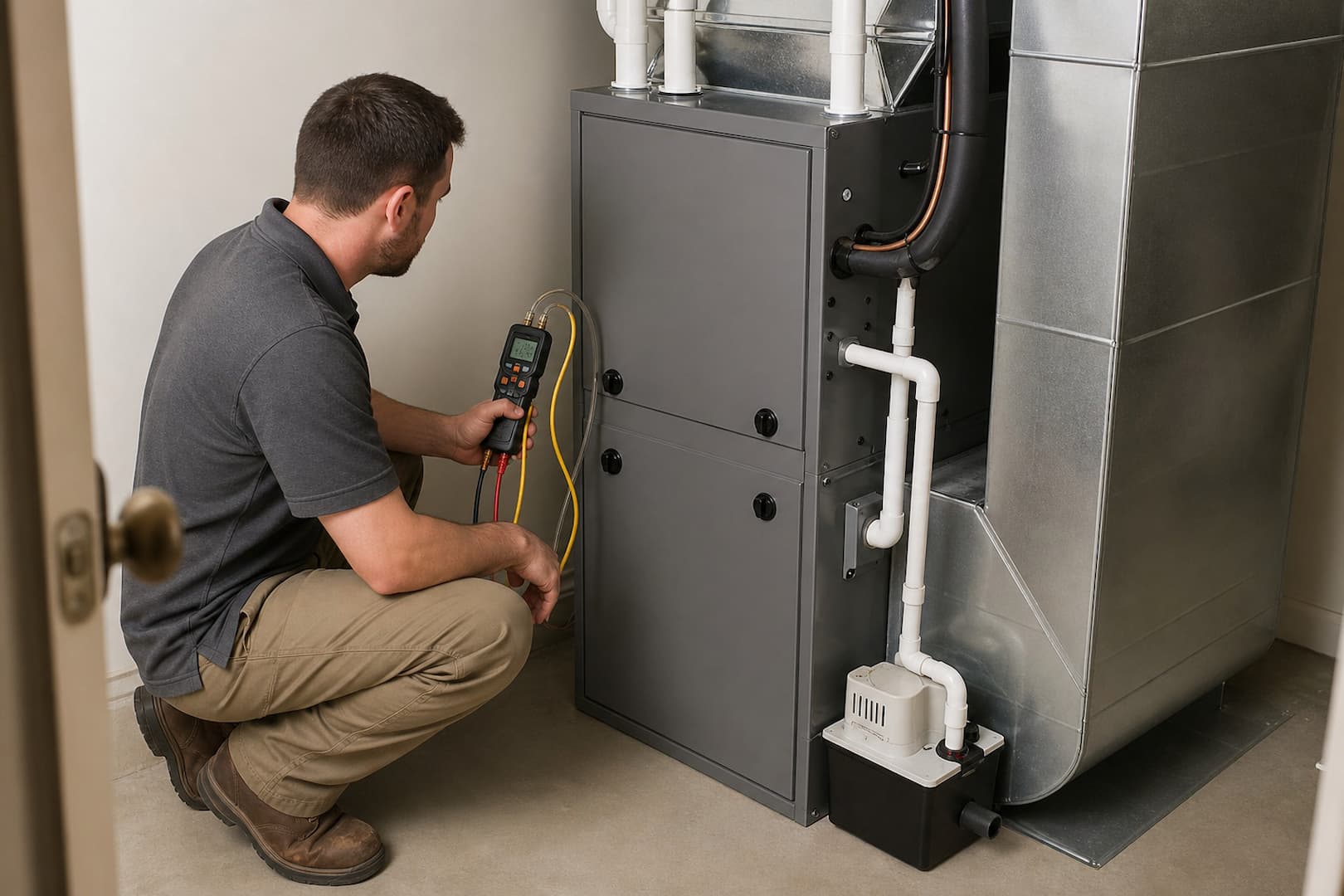
Startup testing checks whether the installed system behaves as designed. The exact tests follow the equipment, but the handoff should leave a record of operation—not just an occupied curb pad.
Blower settings, supply and return behavior, temperature change and room delivery.
Connections, evacuation records, leak checks and operating measurements as applicable.
Furnace sequence, venting, safety controls or electric auxiliary heat where installed.
Thermostat setup, staging, changeover logic, zones and homeowner operating guidance.
Equipment is only one line in the scope. Access, duct condition, utility changes and the decision to reuse or replace connected components often explain the difference between two projects.
A comparable proposal should identify allowances and unknowns before work begins, then state how a discovered condition will be handled.
Get a Project EstimateAll operating modes tested for the installed configuration.
Thermostat, filters and everyday use explained without guesswork.
Equipment information, warranty terms and available startup documentation.
Maintenance timing and homeowner tasks matched to the system.
Scope varies by project. A complete proposal should identify the outdoor and indoor equipment, controls, duct or electrical changes, venting or drainage work, removal of old equipment, permits if applicable, startup testing and warranty terms.
Not automatically. A coordinated replacement can make sense when both are aging, compatibility is limited or a heat-pump conversion changes the indoor equipment. If one component is sound and compatible, a partial replacement may be practical.
Sizing starts with the home's heating and cooling loads, then checks duct capacity, airflow, room behavior and the selected equipment's performance. Repeating the old model size without reviewing the home can repeat an old comfort problem.
Many homes can use a central heat pump, either all-electric or paired with a furnace in a dual-fuel system. The choice depends on loads, ducts, electrical capacity, low-temperature performance, backup strategy and project goals.
Equipment type and capacity, efficiency level, matched components, duct corrections, electrical work, venting, drainage, controls, access, permits and removal all affect price. A reliable estimate follows a home review.
A straightforward residential replacement may take one or two days. First-time installation, duct renovation, electrical upgrades, conversions or multiple systems can take longer. The proposal should include the expected schedule.
Tell us what is installed now, which rooms are uncomfortable and whether the project follows a failure, remodel or planned upgrade.
Complete the form and our team will contact you to arrange the home review.