The furnace will not start
The thermostat calls for heat, but the equipment stays silent or stops before ignition.

No heat, repeated shutdowns and unfamiliar furnace noises all point to a problem, but not necessarily the same problem. MASTER Heating & Cooling tests the system, identifies the failure and explains the repair before work moves forward.
You do not need the name of the failed part when you schedule. Tell us what changed, when it began and whether the thermostat or furnace displays a code.
The thermostat calls for heat, but the equipment stays silent or stops before ignition.
The burner lights briefly, the furnace shuts down, or it restarts again and again.
The furnace sounds active, yet airflow is weak or distant rooms remain cold.
Scraping, squealing, rattling, booming or buzzing deserves inspection before more damage develops.
The system runs for a long time but the home does not reach the set temperature.
A brief dusty smell at seasonal startup differs from a persistent burning odor or suspected gas.
Several failures can create the same symptom. Swapping the most likely part may miss the real cause, so the service call follows the operating sequence and tests the systems connected to the complaint.
Igniters, burners, flame sensors, gas controls and the sequence that confirms safe combustion.
Inducer operation, pressure switches, vent restrictions and condensate pathways on applicable furnaces.
Motors, capacitors, controls, filters, evaporator coils and duct conditions that affect heat delivery.
Low-voltage signals, board faults, wiring, sensors and settings that interrupt or misdirect operation.
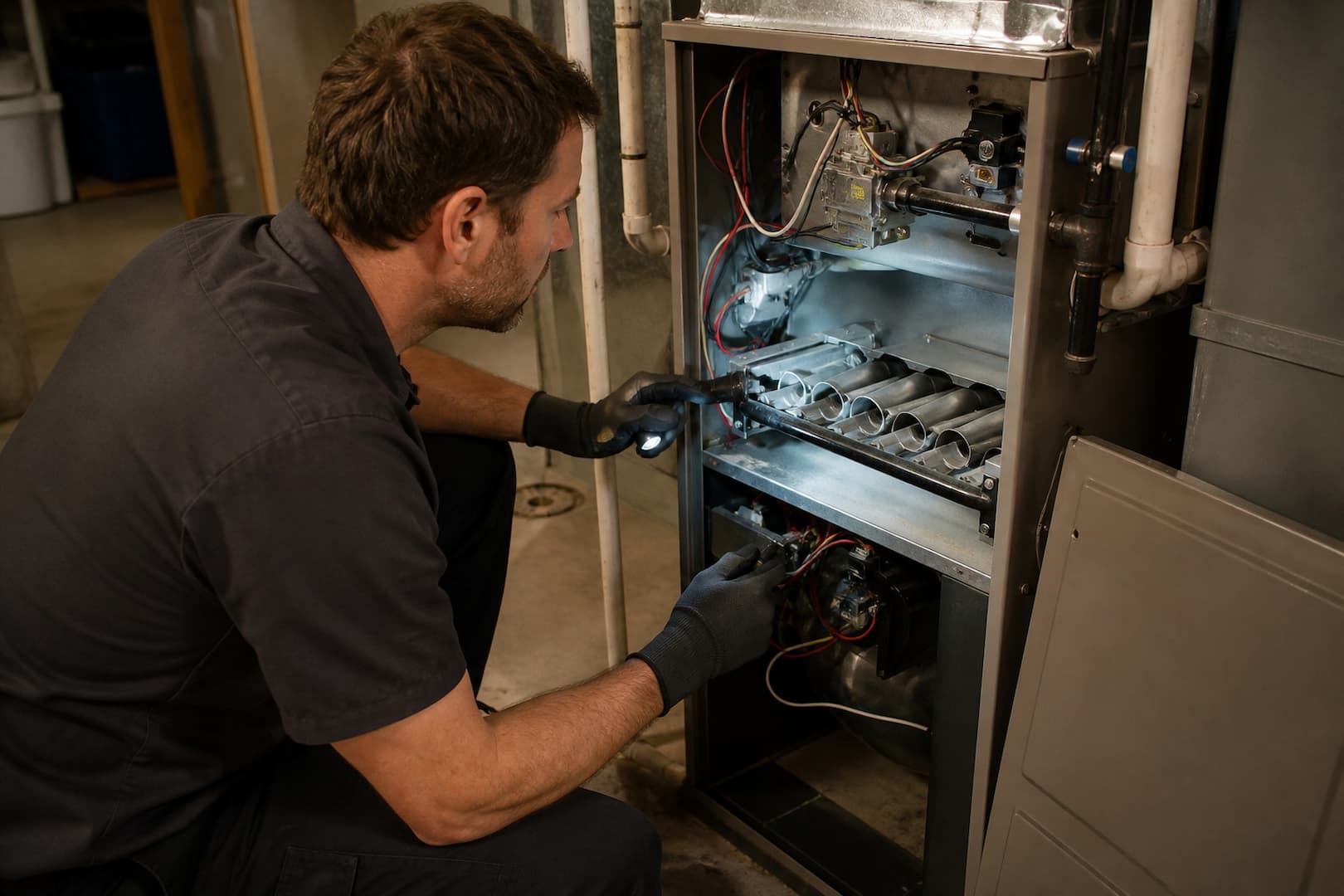
A furnace may lock out because the ignition sequence failed, a safety switch did not prove, airflow caused overheating or the control detected another condition outside its safe operating range. Resetting power can clear the code without fixing the cause.
We look at the sequence around the failure. That may include ignition, flame sensing, draft, venting, condensate, limit controls and the blower. If a safety concern appears, we explain it plainly and discuss the next step before the furnace returns to service.
Do not bypass a limit, pressure switch or door switch. Those controls are part of the furnace safety system, not obstacles to getting it running.
The answer depends on the condition of the furnace and the scope of the failure. A single repair on an otherwise sound system is different from a major repair on equipment with several unresolved problems.
A focused failure, available part and system that performed well before the breakdown often support repair.
Sometimes a repair restores heat while other age- or condition-related items deserve monitoring. We can separate today’s failure from future planning.
Recurring breakdowns, major safety concerns or several expensive components can justify a replacement estimate before committing more money.
Furnace installation options →A furnace symptom does not reveal the repair price. “No heat” could trace to a simple control issue, a motor problem or a fault in the combustion sequence. Accurate pricing follows diagnosis.
Before approved work starts, we review what failed, the repair scope and the price. If the repair exposes another condition that changes the plan, the conversation happens before additional work.
Schedule DiagnosticsPossible causes include thermostat or control problems, ignition failure, restricted airflow, a blower issue, a gas or electrical fault, or a safety control that will not allow normal operation. Testing is needed because the same symptom can come from several parts.
Leave the property and contact the gas utility or emergency service from a safe location. Do not operate switches, start equipment or remain inside to troubleshoot. A routine HVAC scheduling form is not the right first step for a suspected gas leak.
A severely restricted filter can reduce airflow and cause the furnace to overheat and shut down on a safety limit. Replacing a dirty filter is reasonable, but repeated shutdowns, burning odors or poor heating still need professional diagnosis.
The price depends on the failed component, the testing required, equipment access, part availability and whether another fault contributed to the failure. We diagnose first, explain the findings and review the repair price before approved work begins.
Replacement becomes worth comparing when the furnace has multiple major problems, a safety-related failure, recurring breakdowns or a repair cost that is hard to justify for its condition. Age is context, not the only deciding factor.
MASTER Heating & Cooling diagnoses residential gas and electric furnaces as well as related thermostats, blowers, controls and airflow problems. Share the equipment type when scheduling if you know it.
Share the symptoms, when the problem started and any code shown on the furnace or thermostat. We will use that information as the starting point for diagnosis.
Send the service details below and our team will contact you about scheduling.