Ducted Heat Pump
A central air handler uses the home’s duct system for heating and cooling. It can be a clean fit when ducts are in good condition and sized for the airflow.

A heat pump can heat and cool the same home, but the equipment still has to match Spokane winter loads, the duct system or zone plan, electrical capacity and the backup strategy. We work through those choices before installation.
The useful question is not whether heat pumps work in Spokane. Modern equipment can operate in cold conditions. The question is how a specific system will perform against your home’s heating load, and what should happen when outdoor temperatures fall further.
That answer changes with the building, the equipment and the backup plan. A comfortable design may be all-electric, dual-fuel or ductless by zone.
Evaluate My HomeGas furnace, electric resistance, boiler or another system changes the conversion path.
Duct capacity and return air affect a central heat pump; poor ducts may point toward correction or ductless zones.
The design needs a clear balance point and backup strategy rather than a vague promise.
Outdoor equipment, air handler and supplemental heat can change circuit and panel requirements.
The outdoor unit matters, but the indoor side determines how comfort reaches the rooms.
A central air handler uses the home’s duct system for heating and cooling. It can be a clean fit when ducts are in good condition and sized for the airflow.
One or more indoor units condition individual zones without a central duct system. Placement, capacity and condensate routing are planned room by room.
Explore ductless systems →The heat pump handles heating and cooling through much of the year, while a furnace takes over according to the selected controls and balance strategy.
Heat-pump capacity and efficiency change as outdoor temperature falls. Equipment selection should use performance data at relevant temperatures, not only the nominal capacity on a mild-day rating.
In cooling mode, the system moves heat out of the house like an air conditioner. Capacity, airflow, drainage and control setup still determine comfort across the rooms.
Insulation, windows and air leakage affect heating and cooling loads.
Floors, additions and closed rooms influence distribution and zoning.
Existing supply and return paths must support the selected airflow.
Panel capacity and circuits influence equipment and backup heat choices.
Noise, control, fuel preference and future plans change the best-fit path.
The project may include the equipment pad or stand, clearances, line-set routing, electrical disconnect, weather considerations and condensate or defrost-water planning.
A ducted system needs an air handler or compatible coil, transitions, drainage, controls and backup heat where designed. Ductless work adds indoor-unit placement and individual drain routes.
After installation, startup measurements and control settings confirm that both sides communicate and operate as intended.
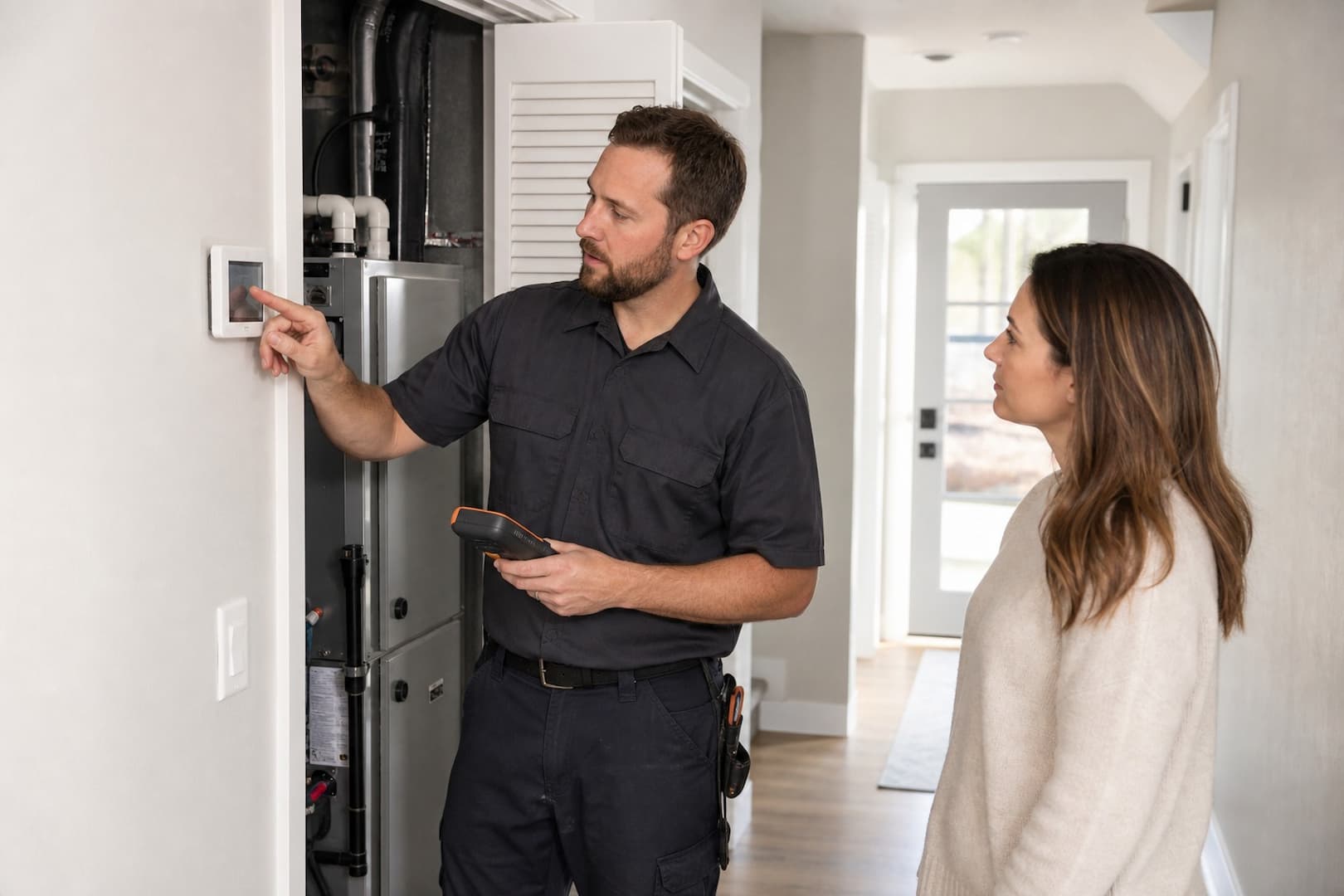
Heat pumps operate differently from furnaces. Long, steady cycles can be normal. Large thermostat setbacks may call on backup heat, and an unfamiliar emergency-heat setting can change operating cost quickly.
At handoff, we review the thermostat modes, filter access, outdoor-unit clearances and what normal defrost operation can look and sound like. You should know which setting to use before the first cold morning.
The equipment is only part of the estimate. A central replacement using sound ducts is a different project from a ductless multi-zone installation or an all-electric conversion with panel and backup-heat work.
A properly selected cold-climate heat pump can provide useful heating through cold weather, but the design must account for the home’s heating load and the equipment’s capacity at lower outdoor temperatures. Some homes use electric backup or a furnace in a dual-fuel configuration.
A ducted heat pump serves rooms through a central air handler and duct system. A ductless system uses one or more indoor units for individual zones. The right choice depends on existing ducts, room layout, the number of zones and the appearance and control you prefer.
Sometimes. The home’s heat loss, electrical service, ductwork, comfort goals and backup strategy all matter. In other homes, a dual-fuel system that keeps a furnace for colder conditions is the better fit.
System type, capacity, efficiency, indoor equipment, electrical work, duct or zone changes, line-set routing, controls, access and backup heat can all change the scope. A site visit is needed for a useful estimate.
They operate in both heating and cooling seasons, so filters, coils, drainage, outdoor clearances, electrical components and controls need regular attention. The maintenance schedule should follow the equipment and how heavily it runs.
Programs and eligibility rules change. Equipment specifications, household or tax requirements, installer documentation and utility territory may affect eligibility. Confirm the current program before treating an incentive as guaranteed project funding.
Tell us what heats and cools the home now, which areas need better comfort and whether you are considering ducted, ductless or dual-fuel equipment.
Complete the form and our team will follow up to arrange the next step.