Clear winter buildup
Check indoor filters, coils, blowers, drains and outdoor airflow before the first sustained warm period.

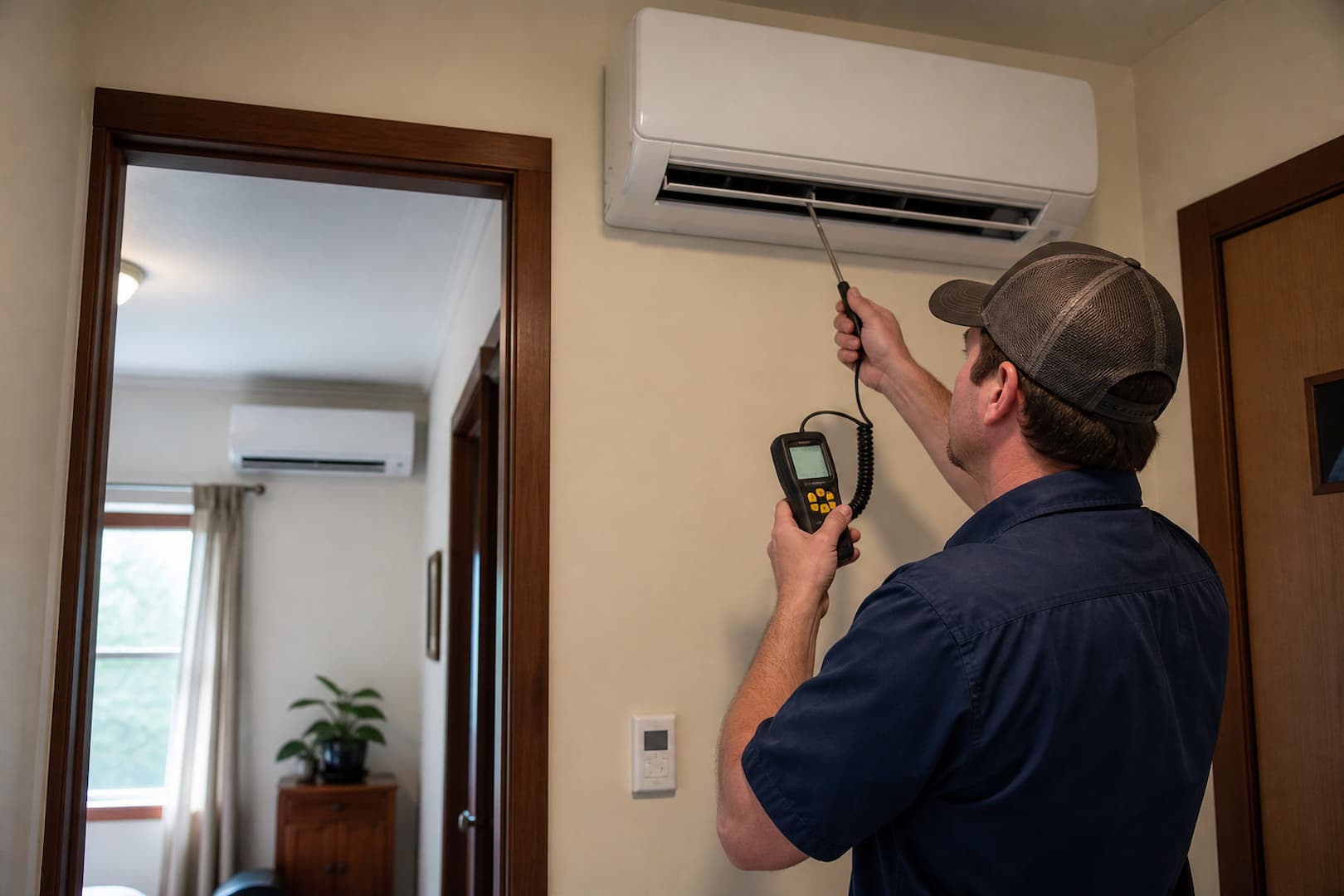
Each indoor head collects its own dust, manages its own condensate and runs a different number of hours. A useful ductless tune-up checks every zone, the shared outdoor equipment and the way the system performs together.
Check indoor filters, coils, blowers, drains and outdoor airflow before the first sustained warm period.
Bedrooms, kitchens and sun-exposed rooms may load filters faster. Clean homeowner-accessible filters as the manual directs.
Confirm controls, heating output, drainage and outdoor-unit clearances before leaves and snow complicate access.
Remove nearby snow and debris without striking the coil, enclosing the equipment or blocking discharge air.
Clean filters matter, but the air also crosses the indoor coil and blower wheel. Moisture then enters a drain pan and leaves through a condensate line. Dust or buildup farther inside can reduce airflow, hold odors and contribute to water problems even when the filter looks acceptable.
Condition, fit and accumulated debris at the first air-contact surface.
Heat-transfer surface, fan wheel, louvers, airflow and signs of biological growth.
Standing water, pitch, blockage, pump operation and a clear discharge path.
Temperature response, communication, operating modes and stored fault history.
| Area | Condition | Operation | Why it matters |
|---|---|---|---|
| Indoor heads | Filters, coil, blower, louvers and mounting | Fan speeds, temperatures, sensors and controls | Every room depends on its local air path |
| Condensate | Pan, drain, hose, fittings and pump if present | Water clears without backing into the head | Drain trouble can damage walls and finishes |
| Outdoor unit | Coil, fan, base, clearances and visible connections | Heating, cooling and defrost-related behavior as conditions allow | All zones share the outdoor equipment |
| Electrical | Accessible connections, disconnect and wiring condition | Voltage and component checks as appropriate | Loose or stressed connections can interrupt the complete system |
| System record | Error history and prior concerns | Zone-to-zone response after service | Patterns often appear before a full shutdown |
Use the interval and method in the owner's manual. Let washable filters dry before reinstalling them.
Do not block the inlet, discharge vanes or the path air needs to travel across the room.
Staining, drips or a pump that runs constantly are reasons to schedule service.
A head that becomes noisier, dirtier or weaker than the others gives useful diagnostic evidence.
Leaves, shrubs, snow and stored items should not obstruct intake or discharge air.
Photograph the display before resetting anything and note which zones were operating.
For an active problem, use our mini-split repair page.
The interval depends on operating hours, home conditions, indoor-unit count and manufacturer guidance. A system used for both heating and cooling usually needs attention more often than a unit serving an occasional-use room. Check warranty requirements as well.
Most washable filters are intended for homeowner cleaning. Turn the unit off, follow the owner's manual, let filters dry completely and reinstall them correctly. Do not bend coil fins, spray household cleaners into the unit or open electrical and refrigerant compartments.
Dust, moisture and biological growth on filters, the blower wheel, coil or drain pan can cause odors. A burning or electrical odor is different: shut the unit off and arrange repair rather than treating it as maintenance.
Yes. Each head has its own filter, coil, fan, drain and sensors. Servicing only the easiest unit can leave the dirtiest or least-used zone with restricted airflow or stagnant drainage.
Maintenance addresses routine condition and identifies developing problems. An active error code, repeated breaker trip, leak, failed fan or loss of heating and cooling calls for diagnosis and repair, even if cleaning is also needed.
For heating operation, check filters and airflow, outdoor-unit clearances, drainage and defrost-related operation. Keep leaves, snow and roof runoff away from the outdoor unit without enclosing it or blocking discharge air.
Tell us how many indoor units you have, whether the system heats and cools, and when it was last professionally serviced.
Send the system details below and our team will contact you about scheduling.