Two-season preventive service

Heat Pump Maintenance & Tune-Up in Spokane, WA

A heat pump does not get a long off-season. It cools through summer, reverses for winter heating, manages frost outdoors and may coordinate with electric or furnace backup. Maintenance should check the entire year—not just clean the coil.

  • Heating and cooling operation
  • Indoor and outdoor equipment
  • Defrost and backup-heat checks
  • Ducted system maintenance
Plan around actual use

One Outdoor Unit Carries Two Busy Seasons

Cooling leaves dust, condensate and long runtime behind. Heating adds cold-weather capacity, defrost cycles, snow clearance and backup-heat coordination. A system that looked fine in July can behave differently after the first freezing night.

Annual maintenance is a practical baseline for many homes. Heavy use or a history of seasonal trouble may justify separate spring and fall visits.

Book repair—not routine maintenance—if the heat pump has already stopped heating or cooling, is locked in ice, trips protection or makes a severe new noise.

SpringCooling startup, drainage and outdoor cleanup
SummerFilter, airflow and clearance housekeeping
FallHeating, defrost and backup-heat preparation
WinterSnow, ice and roof-runoff awareness
Maintenance map

The Visit Connects Indoor Airflow to Outdoor Heat Transfer

Heat pumps move heat in both directions. The indoor side cannot be separated from the outdoor side when operating temperatures, airflow or backup heat look wrong.

Inside the home

ThermostatHeating, cooling, fan and applicable auxiliary-heat response
AirflowFilter, blower, indoor coil and visible supply-return restrictions
DrainagePan, condensate path and pump where installed
Backup heatElectric stages or dual-fuel coordination as applicable
ElectricalAccessible wiring, components and controls
At the outdoor unit

CoilDirt, leaves, fin condition and open airflow around the cabinet
FanCondition, sound and operation in the tested mode
BasePad, drainage, vegetation, snow exposure and roof runoff
DefrostSensors, controls and available operating evidence
RefrigerationOperating temperatures and measurements when conditions call for them
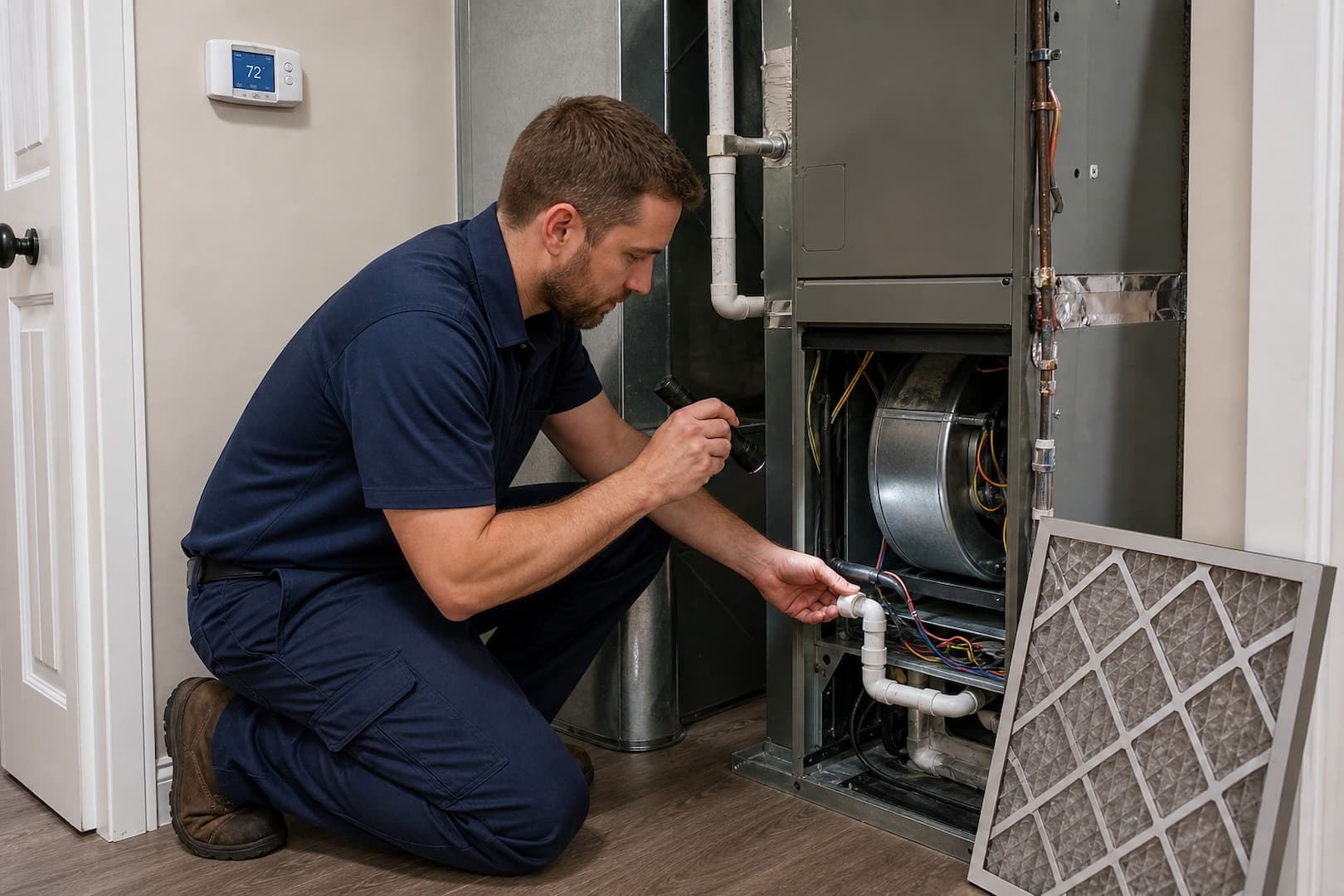
Technician checking a heat pump air handler blower, filter and condensate drain
Indoor maintenance

A Clean Outdoor Coil Cannot Fix Restricted Indoor Air

Airflow carries the heat that the refrigerant circuit moves. A loaded filter, dirty blower wheel, obstructed coil or weak motor can show up as long cycles, poor room comfort, high temperature rise in backup heat or indoor-coil freezing during cooling.

The filter is the homeowner’s most visible maintenance item, but it is not the only one. Filter type and fit matter, too. An overly restrictive replacement can create trouble even when it looks clean.

  • Use the size and type appropriate for the equipment
  • Keep supply and return registers open and unobstructed
  • Watch for water near the indoor unit
  • Note changes in blower sound or airflow
A workable rhythm

Homeowner Housekeeping and Professional Service Have Different Jobs

Between visits

  • Check the filter at a practical interval
  • Keep leaves, grass and stored items away from the outdoor unit
  • Maintain supply and return airflow inside
  • Watch for persistent ice, water and new sounds
  • Record recurring thermostat messages

During professional maintenance

  • Inspect and test the equipment in available modes
  • Evaluate airflow, drainage and accessible components
  • Clean serviceable areas as condition and scope require
  • Check defrost and backup-heat controls where applicable
  • Separate normal findings from repair recommendations
A useful service record

Track Changes, Not Just Appointment Dates

The most useful maintenance history shows how the system behaved over time. That context can shorten a future diagnosis and reveal a pattern that one visit cannot.

Filter pattern

How quickly the filter loads and whether the type changed.

Operating notes

Temperatures, control settings and relevant readings under the day’s conditions.

Seasonal symptoms

Ice, noise, water, backup heat or room comfort that returns in similar weather.

Work performed

Cleaning, adjustments, repair recommendations and parts replaced.

Spokane winter detail

Outdoor Clearance Has to Work After the Snow Arrives

Give the unit room to breathe and drain

A heat pump needs outdoor airflow in winter, and normal defrost creates water. Leaves, drifting snow, ice at the base, nearby shrubs and roof runoff can interfere with that process.

  • Preserve the equipment manufacturer’s side and top clearances
  • Keep snow from blocking the coil without striking or chipping it
  • Direct roof runoff away from the unit where practical
  • Do not build an enclosure that traps discharge air
Related decisions

Use the Page That Matches the System’s Condition

Maintenance

The system still heats and cools. You want preventive cleaning, inspection and operating checks.

Installation or replacement

You are comparing a new system, a major repair is difficult to justify or the home needs a different heating strategy.

Explore heat pump installation →
Before scheduling

Heat Pump Maintenance FAQ

How often should a heat pump receive maintenance?

Because a heat pump can run in both heating and cooling seasons, many residential systems benefit from professional maintenance at least once a year. Equipment instructions, runtime, dust, landscaping, snow exposure and prior findings may support a spring-and-fall schedule.

Is heat pump maintenance different from AC maintenance?

The cooling-side checks overlap, but a heat pump also has heating mode, reversing and defrost controls, cold-weather outdoor operation and backup heat or dual-fuel coordination. Maintenance should account for both seasons.

What can I do between professional heat pump tune-ups?

Keep the correct filter clean, maintain open supply and return registers, remove leaves and loose debris around the outdoor unit, and preserve the manufacturer’s clearances. In winter, keep drifting snow and roof runoff from blocking the unit without chipping ice from the coil.

Does a heat pump tune-up include refrigerant?

Refrigerant is not a routine maintenance refill. If operating checks suggest an incorrect charge or leak, the finding moves into diagnosis. The repair scope depends on the equipment, refrigerant and location of the problem.

Can maintenance stop the system from using auxiliary heat?

Maintenance may correct airflow, control or outdoor-unit conditions that cause unnecessary backup-heat use. Auxiliary heat can also be normal during low outdoor temperatures, defrost or thermostat recovery. The controls and system design determine what is expected.

Should I schedule repair or maintenance?

Choose maintenance when the system still heats and cools and you want preventive inspection and cleaning. Choose repair for no heating or cooling, persistent ice, repeated breaker trips, severe noise, a recurring error or backup heat that behaves abnormally.

Year-round equipment care

Schedule Heat Pump Maintenance for the Season Ahead

Tell us whether the system is ducted, ductless or dual-fuel, when it last received service and what you noticed in the previous heating or cooling season.

  • Heating and cooling mode review
  • Indoor and outdoor maintenance
  • Defrost and backup-heat context

Request a Heat Pump Tune-Up

Complete the form and our team will follow up about scheduling and equipment scope.

Get Quote

Areas We Cover