
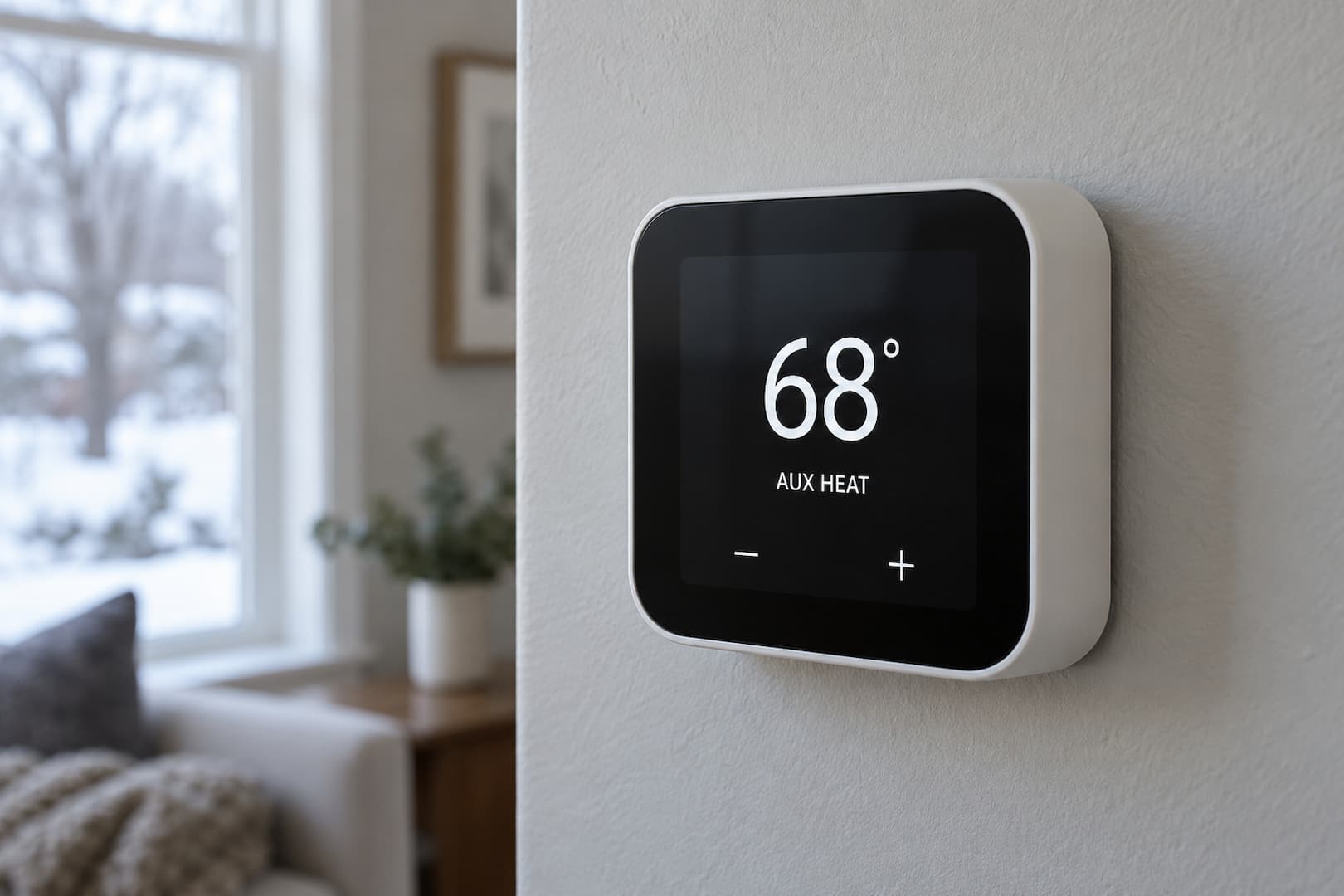
AUX heat is backup heating that your thermostat brings on automatically. Emergency Heat is a mode you select to run the backup source while the outdoor heat pump compressor stays off. They may use the same indoor heating equipment, but they tell the system to operate differently.
Seeing AUX on a cold Spokane morning does not, by itself, mean the heat pump has failed. The useful questions are whether the house is reaching its temperature setting, what the weather is doing, and whether anything has changed. Switching to Emergency Heat just because AUX appeared can leave you paying for backup heat when the heat pump could still be working.
HEAT, AUX and EM HEAT: what changes?
| Thermostat display or mode | What the system does | What you should do |
|---|---|---|
| HEAT | Normal heating mode. The controls choose the heat pump and any permitted backup stages. | Use for everyday winter heating. |
| AUX / AUX HEAT | The controls automatically request supplemental or alternate heat. Compressor operation depends on the equipment and settings. | Check the context; AUX alone is not a fault code. |
| EM HEAT / Emergency Heat | The selected mode locks out the outdoor compressor and calls for the installed backup heat. | Use for an outdoor heat pump failure, following the equipment instructions while arranging service. |
Trane explains the automatic-versus-manual distinction. Your thermostat may use different labels or show a heating-stage number instead. Read the manual for your particular control rather than treating another thermostat’s screen as a wiring guide.
The backup source may be electric strips or a furnace
In an all-electric ducted system, resistance heating elements in the indoor air handler commonly provide auxiliary heat. Those elements can add heat while the heat pump runs, when the equipment permits it. AUX and Emergency Heat may therefore energize the same elements under different control instructions.
A dual-fuel system pairs a heat pump with a fuel-burning furnace. Its controls generally switch between sources according to the approved configuration; do not assume the furnace and compressor should run together. Trane’s dual-fuel overview describes this changeover. Fuel prices, equipment efficiency and the home’s heating load affect which source makes sense.
A thermostat menu is not proof that a backup heater was installed. Check your equipment paperwork or ask the servicing contractor. This matters especially after moving into a home or replacing a thermostat: selecting a mode cannot create heating capacity that the system does not have.
Why auxiliary heat comes on
The same AUX message can have several explanations. Start with what happened just before it appeared: a colder night, a change in the thermostat setting or a defrost cycle.
Cold weather increases the heating demand
As outdoor temperatures fall, the house needs more heat. If the heat pump cannot meet that demand on its own, the controls can bring in backup. The thermal balance point is where the home’s heating demand meets the heat pump’s available output. Carrier stresses that there is no universal AUX activation temperature. Rules such as ‘all heat pumps need backup below 35°F’ or ‘AUX above 40°F always means a fault’ overlook equipment and control differences.
A large thermostat increase asks for faster recovery
Raising the setpoint several degrees can trigger backup, depending on how the thermostat stages heat. Consider a house at 64°F after a setback, with a new setting of 70°F. The thermostat may call for extra capacity to close that gap. That example explains a possible trigger; six degrees is not a universal threshold.
Defrost temporarily changes the heat pump’s operation
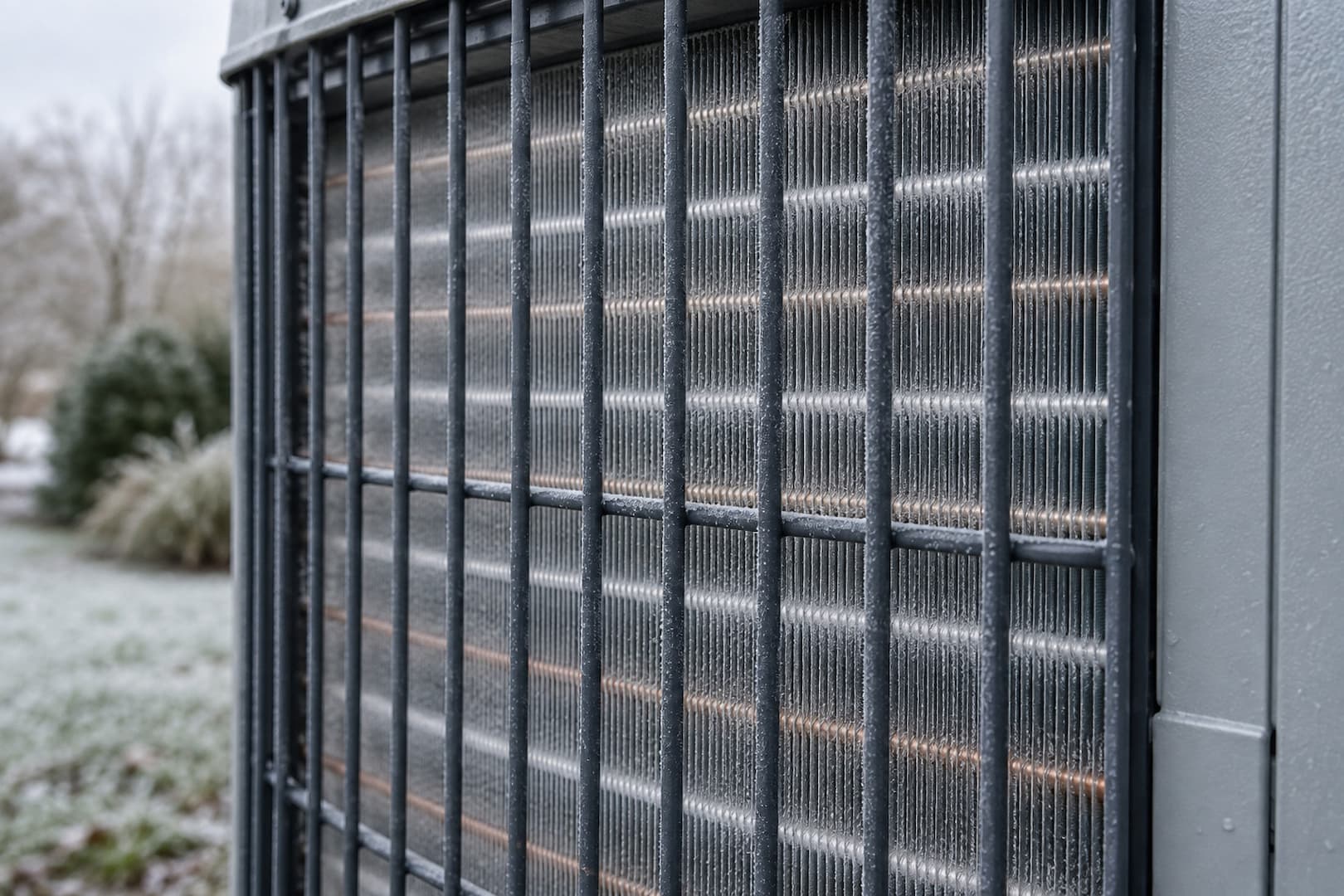
During heating, moisture can freeze on the outdoor coil. The heat pump periodically warms that coil to clear frost. Electric backup may keep the indoor air comfortable during this short interruption. A brief AUX indication during defrost can be expected on an appropriately equipped system.
A light frost layer that clears, a temporary change in sound, a stopped outdoor fan and a brief plume of water vapor can accompany defrost. Trane describes these normal defrost signs. Persistent heavy ice, repeated unsuccessful defrost cycles or a fan striking ice need service. Never chip the coil with a tool or try to force a thaw with hot water.
Normal backup heat or a problem that needs service?
Look at the room temperature as well as the display. Is the house catching up to the setting, holding it, or drifting colder? Compare the behavior with similar weather and settings.
AUX during a cold spell, after a schedule change or around defrost is less concerning when the rooms warm up and the system returns to its usual pattern. Longer heat pump runtimes during cold weather can also be normal. Runtime alone does not identify a failed compressor.
Arrange service when AUX becomes a new, persistent pattern in milder conditions, when room temperature keeps falling despite a reasonable setting, or when airflow drops noticeably. Heavy ice that does not clear, repeated breaker trips and new grinding noises also need attention. An AUX message cannot distinguish a thermostat problem from an airflow, refrigerant or equipment fault.
Before calling, write down the room temperature and setpoint, approximate outdoor temperature, when AUX appeared, and any recent schedule or thermostat changes. A photo of the display and an accessible equipment model label can help the technician prepare. There is no need to remove a panel to collect those details.
Checks you can make without opening the equipment
- Check the mode. Confirm that the thermostat is in HEAT for normal operation and that Emergency Heat was not selected accidentally. Note any error message before changing anything.
- Look at the filter and indoor airflow. Replace a dirty filter with the specified type, following the owner’s instructions. Keep supply registers and return grilles unobstructed. Do not remove equipment panels to investigate weak airflow.
- Look around the outdoor unit. Keep loose snow, leaves and stored objects away from the air openings, using the manufacturer’s clearance requirements. Clear the surrounding area carefully; leave attached ice and the coil alone.
- Review the schedule. Check whether a morning temperature increase coincides with AUX. Give the system a steady, reasonable setting while you record what happens.
Carrier’s homeowner troubleshooting guide covers thermostat, filter and outdoor airflow checks. If those checks do not explain the change, book a diagnosis instead of repeatedly cycling power.
Do not alter installer menus, lockout temperatures, wiring or safety controls to make AUX disappear. Those settings depend on the equipment combination. Trane assigns auxiliary and emergency heat configuration to an HVAC technician. Disabling backup without checking the system can leave the house short of heat.
When should you use Emergency Heat?
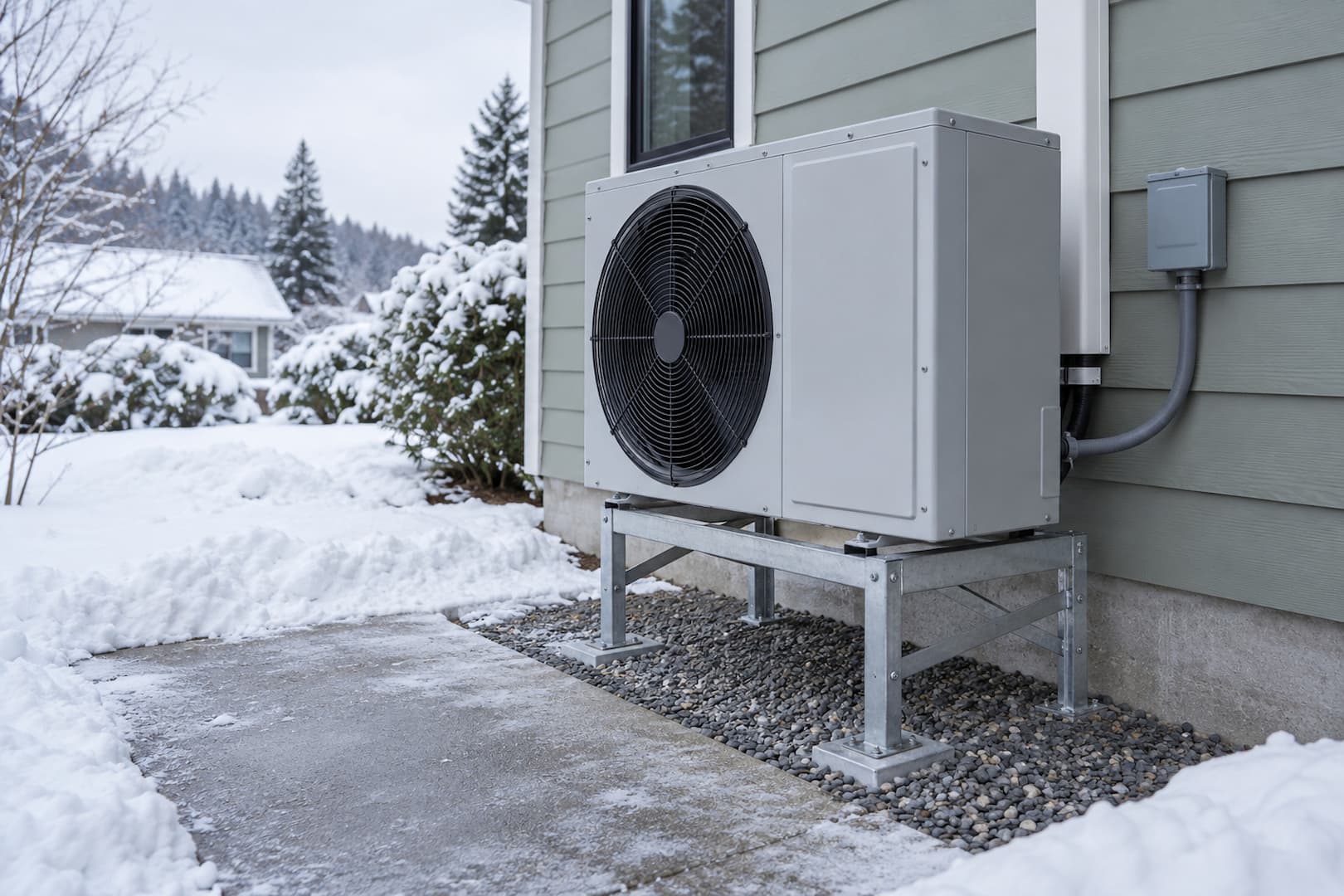
Use it as a temporary heating option when the outdoor heat pump has failed, the system has a working backup source, and the owner’s manual or servicing technician directs you to that mode. Arrange repair at the same time. The name does not mean ‘extra heat for especially cold weather’; normal HEAT mode already manages the available stages.
Once selected, check that warm air is reaching the rooms and the indoor temperature is recovering. If backup heat does not work, tell the contractor promptly. Emergency Heat cannot solve a failed shared blower, loss of electrical power or every control fault. After repair, confirm that normal HEAT mode has been restored.
Smoke, sparking, a strong electrical burning odor, a gas smell or a carbon monoxide alarm calls for a different response: leave the building and call 911 from outside. For a suspected gas leak, also contact the gas utility from outside. Do not operate switches or try to solve a hazardous condition by changing heating modes.
Does AUX heat use more electricity?
Electric resistance backup usually costs more to provide the same amount of heat than a functioning heat pump operating efficiently. The size of the heater and its actual runtime matter. A gas furnace backup needs a separate comparison using fuel cost and furnace efficiency; it does not follow the electric-strip calculation.
For a hypothetical example, a 10 kW resistance heater running continuously for two hours uses 20 kWh. At an assumed electricity price of $0.15 per kWh, that is 10 kW × 2 hours × $0.15 = $3.00. This is only the heater’s electricity in that example, excluding the blower, any compressor use and other bill charges. It is not an Avista tariff or a prediction of your bill.
To reduce avoidable electric-strip use, start with the schedule. If a deep overnight setback brings AUX on every morning, try a steadier setting and watch whether backup runtime changes.
The U.S. Department of Energy’s Energy Saver guide advises against heat pump setbacks that bring on backup resistance heat. If you want a schedule, have the contractor check the thermostat’s heat pump recovery features rather than copying a furnace schedule.
Frequently asked questions
Should I turn off AUX heat?
Do not disable a designed backup stage just to remove the label. Check the reason it is running. Unnecessary use may be reduced through appropriate scheduling, maintenance or a repair, while necessary backup keeps the home warm.
How long should AUX heat stay on?
There is no single safe runtime for every home. Weather, heat loss, equipment capacity and recovery from a setback all affect it. A new pattern or falling room temperature is more useful to report than an arbitrary minute limit.
Can Emergency Heat run overnight?
A properly operating backup system may provide temporary overnight heat when the manual permits it. Confirm that it actually heats the home and arrange service. If indoor temperature keeps falling, make safe alternative arrangements rather than relying on the thermostat label.
Heat pump help in Spokane
If AUX keeps appearing and the house is not warming up, contact MASTER Heating & Cooling for heat pump service in Spokane. Share the symptoms and temperature readings when you schedule. For a system that is heating normally but is due for inspection, see our heat pump maintenance service.