
A furnace blowing cold air does not always need a repair. Brief cool airflow at startup or after the burners stop can be normal. A fan set to ON can also circulate room-temperature air between heating cycles. If the air stays cold and the house is losing heat, check the thermostat, filter and open air paths before arranging service.
Start by noticing when the cold airflow occurs. Does warmth arrive later in the cycle, or does the house keep getting colder? Compare rooms, too. These observations help narrow the problem without opening the furnace.
Smell gas or hear a carbon monoxide alarm? Leave first
A suspected gas leak or carbon monoxide emergency takes priority over every check below. If you smell rotten eggs or suspect escaping gas, get everyone outside. Do not operate the thermostat, flip electrical switches, unplug equipment or use a phone inside. From a safe distance, call 911 and your gas utility. Avista customers can call (800) 227-9187 after calling 911, as directed in Avista’s gas safety guidance.
Carbon monoxide has no smell. If a CO alarm sounds, or you suspect exposure, leave immediately with everyone in the home and call 911 from outside. Seek emergency help for symptoms such as headache, dizziness or nausea. Stay outside until emergency personnel clear the building. Avista’s CO guidance also advises calling the utility after 911. Do not wait for an HVAC appointment.
Match the airflow pattern to the next step
Use this table to decide what to check, rather than to identify a failed part. Several faults can produce the same symptom.
| What you notice | Possible explanation | Next step |
|---|---|---|
| Cool air briefly, then steady warmth | Normal startup or cool air remaining in ducts | Watch whether the home reaches its set temperature |
| Comfortable rooms, but cool airflow between heating cycles | Continuous or scheduled fan operation | Check the fan setting and circulation schedule |
| Warm air changes to cool; short heating cycles repeat | Restricted airflow or a safety shutdown | Check the filter and grilles; arrange service if it repeats |
| Fan runs but no sustained heat reaches any room | Ignition, controls, fuel supply or another equipment fault | Confirm thermostat settings, then call for diagnosis |
| One room stays cold while others warm up | Local airflow, duct or room heat-loss problem | Check that room’s register and return path |
Check the thermostat before changing anything at the furnace
Set the operating mode to HEAT and choose a target a little above the displayed room temperature. Look at the current schedule, too: an overnight setback or an active hold may explain why the heating stopped. Replace batteries if the thermostat uses them and shows a low-battery warning.
The fan setting is separate from the heating mode. With the fan on ON, the blower can continue moving air while the burners are off. Choose fan AUTO to let the heating controls manage the blower, including their normal delays. A separate “Circulate” option may also run the fan between heating calls. Carrier’s cold-air troubleshooting guide explains this common distinction.
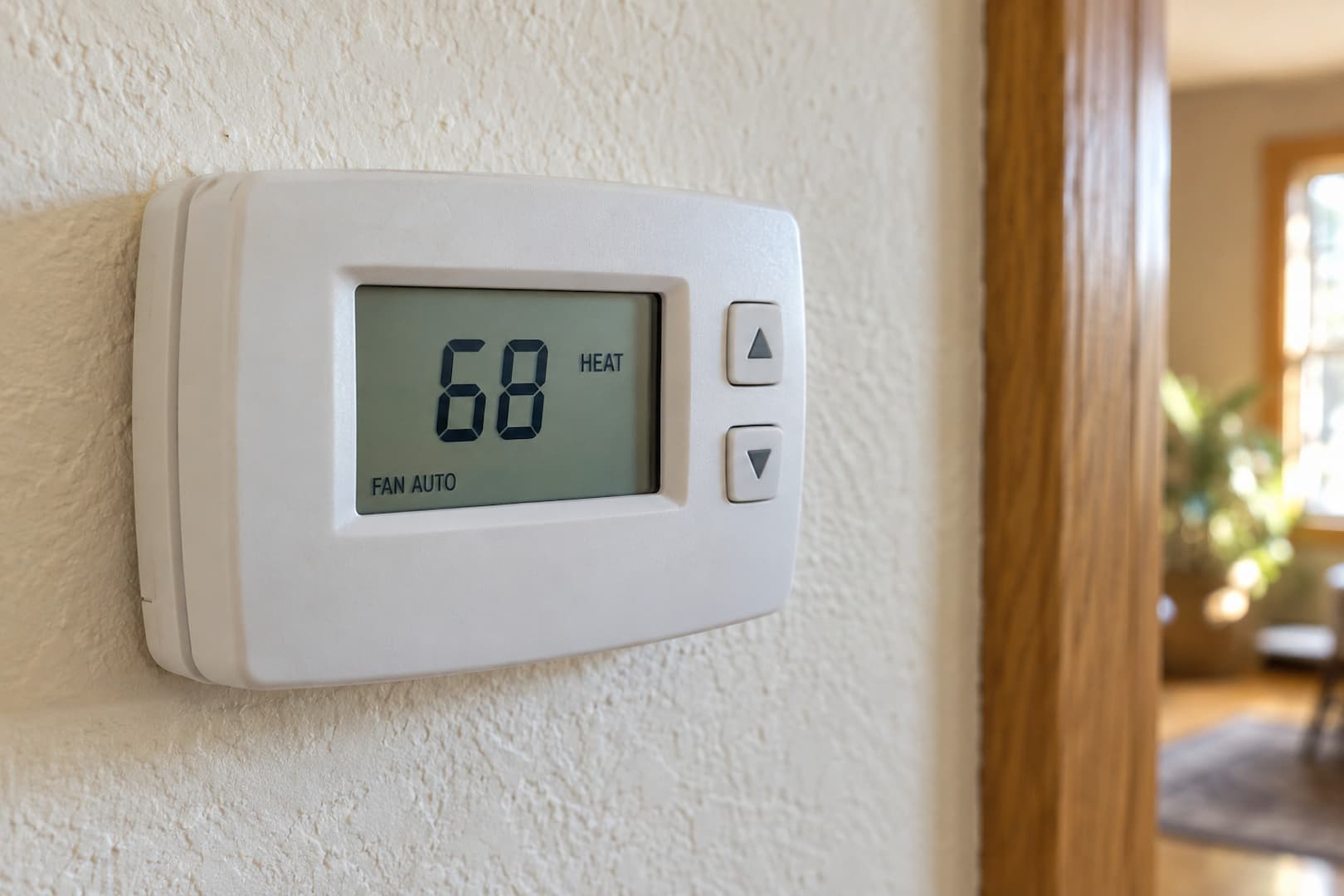
Wait through the normal startup sequence before judging the air at a register. Check the owner’s manual for your model’s timing; there is no single correct delay for every furnace. Briefly cool air that becomes warm is different from a blower that keeps running while the room temperature falls. Raising the setpoint repeatedly will not resolve a fault.
A blower may also run briefly after the burners stop to remove remaining heat. If the fan never stops, even after changing from ON to AUTO, record that behavior for the technician. Do not assume that an AUTO setting proves the furnace is heating.
Inspect the filter and clear the air paths
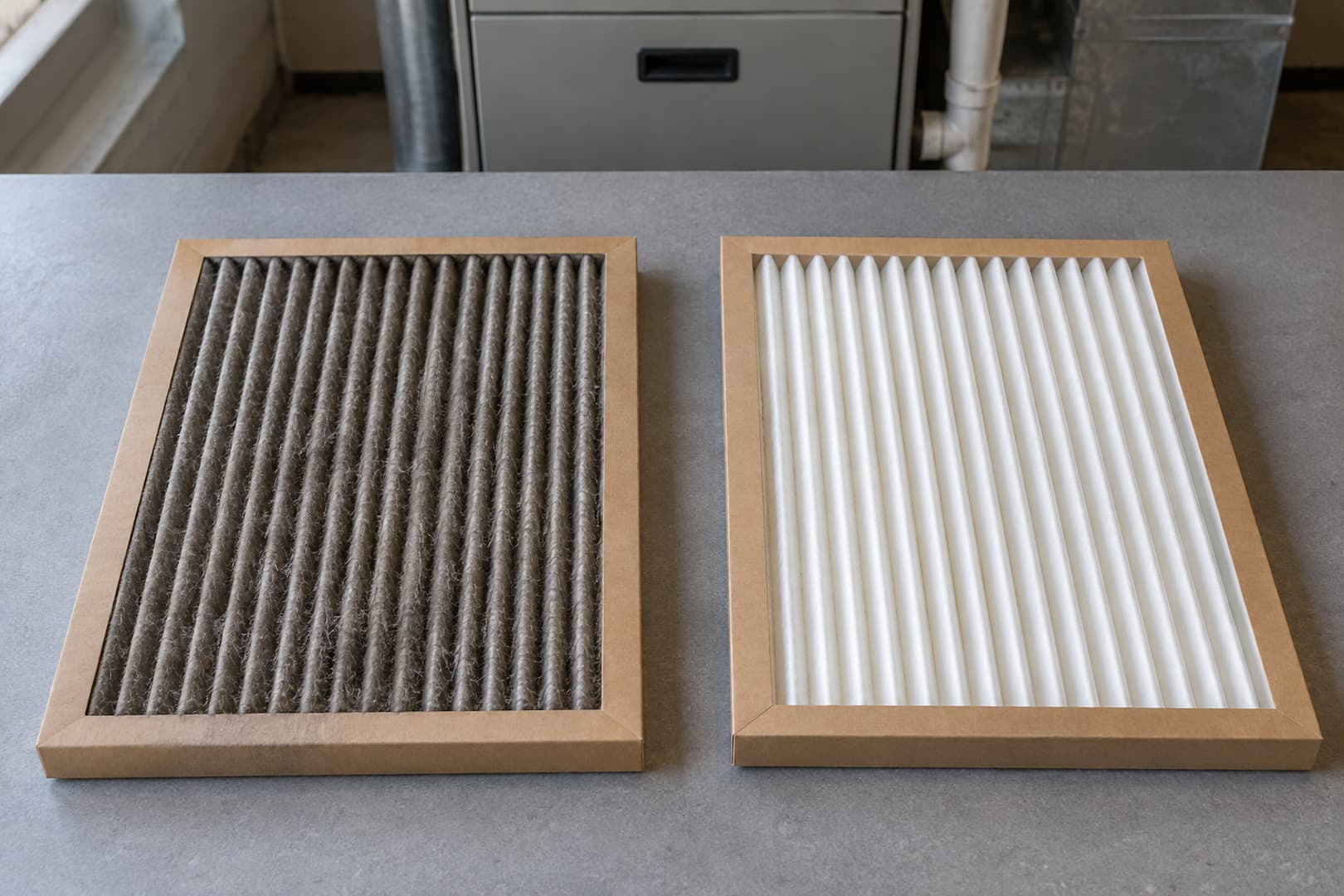
A filter clogged with dust restricts airflow. In a gas furnace, inadequate airflow can make the furnace overheat and interrupt heating. The fan may keep running during that interruption. A dirty filter is worth checking, but finding one does not prove it is the only problem.
Use the filter-access instructions for your model. Shut the system off as the manual directs and wait for the blower to stop before removing the filter. If reaching it requires opening unfamiliar equipment compartments, leave that check to a technician.
- Match the replacement’s dimensions and the filter specification recommended for the system. A higher filtration rating is not automatically a suitable upgrade.
- Follow the airflow arrow: it should point toward the furnace or air handler, in the direction marked at the filter slot.
- Seat the filter properly, close its access cover and restore operation according to the manual. Do not run the furnace without its required filter.
Lennox’s filter instructions show how to confirm the size and airflow direction. Replacement timing depends on the filter and household conditions, so inspect it instead of relying only on a calendar reminder.
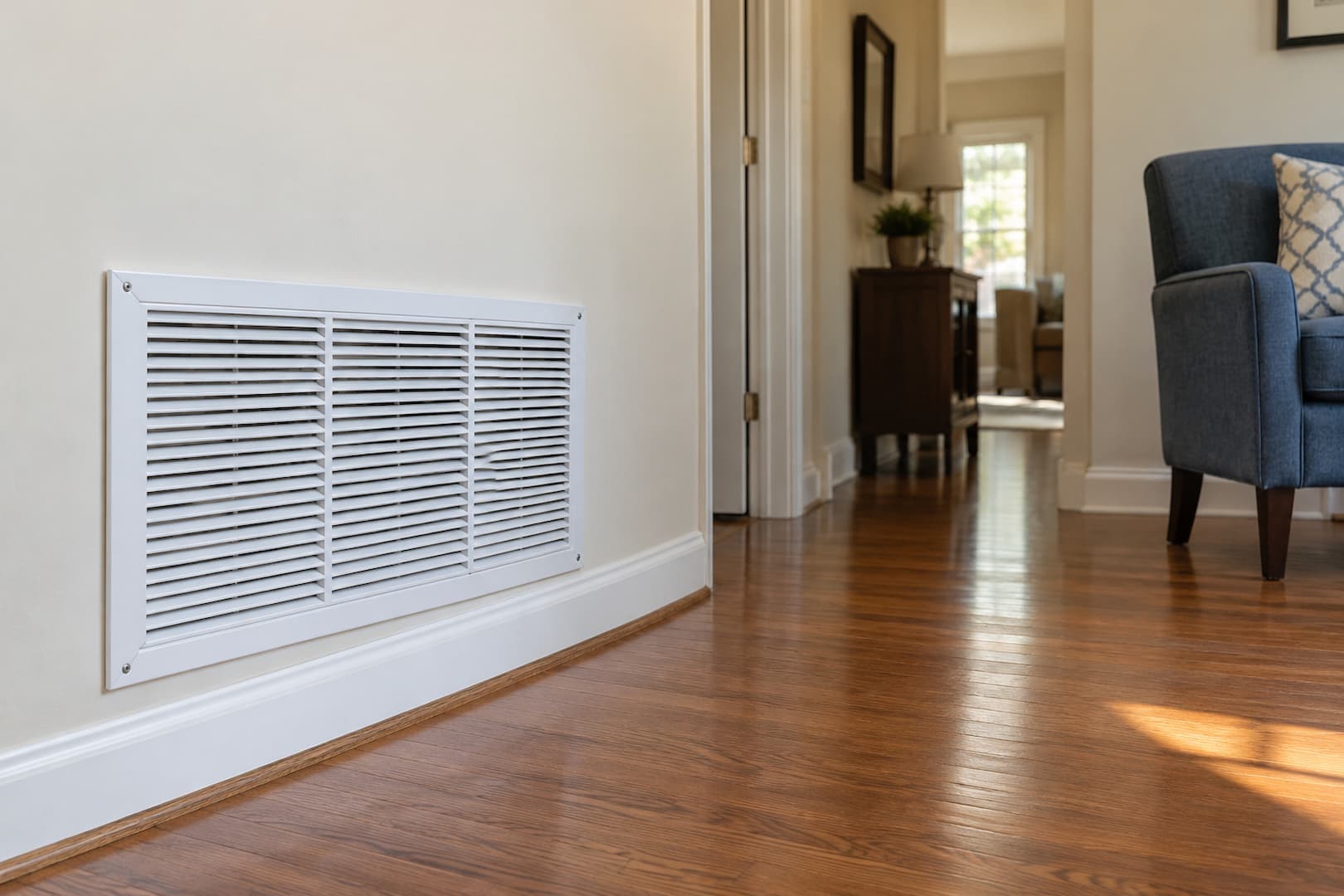
Walk through the rooms and uncover supply registers hidden under rugs or furniture. Keep return grilles clear of boxes, curtains and sofas.
Supply registers deliver air; returns let it travel back to the equipment. Closing several registers to force more warmth into one room can create an airflow problem elsewhere.
Watch the next normal heating call after changing a filter or clearing an obstruction. If warm air returns but cuts out again, book service. Brief warmth does not resolve a repeated shutdown.
When the fan works but the furnace cannot keep heating
Air movement only tells you the blower is running. The furnace still has to establish safe conditions for heating. Avoid repeated power resets, burner cleaning, gas-valve adjustments or bypassing any switch to make it run.
Ignition and flame detection
A gas furnace may fail to ignite, or it may light and shut down moments later. The igniter, flame-sensing circuit, fuel supply and controls are among the possibilities. The sound alone cannot identify the faulty component. Leave combustion-system checks to a qualified technician, including a pilot that will not stay lit.
Overheating and safety controls
A high-limit control can interrupt burner operation when the furnace gets too hot. Restricted airflow is one possible cause; the blower or another component may also need attention. Replacing or bypassing the limit switch without finding the cause can leave the underlying problem in place.
Condensate and venting
High-efficiency gas furnaces produce condensate. A drainage fault can prevent normal heating. Note any water near the furnace, but leave drain traps, pumps and internal tubing to the service technician. Trane’s furnace troubleshooting guide covers condensate, ignition and safety-control faults that can leave a blower running without useful heat.
From a safe, ground-level position, look for snow, leaves or other obstructions around exterior intake and exhaust openings. Do not dismantle pipes, chip ice from them or climb to reach a vent. Report an obstruction or damaged vent so a technician can check the complete venting system.
If a status light is visible through the furnace’s viewing window, photograph the flash pattern without removing panels. Codes are model-specific: a pressure-switch message, for example, is a clue to investigate, not proof that the switch itself needs replacement.
If only one room is cold, compare the registers
A furnace that warms most of the house is a different case from one that delivers no heat anywhere. Check whether the affected room’s supply register is open and clear. Compare the airflow with another room during the same heating cycle; avoid comparing a running cycle with the idle period between cycles.
An obstructed return path, a closed balancing damper or a leaking duct can reduce delivery to one area. A room can also lose heat through its windows or exterior surfaces faster than neighboring rooms. Tell the technician whether the air itself feels cooler, the airflow is weaker, or warm air arrives but the room stays cold. That distinction helps direct the inspection.
Make sure you have a furnace, not just an indoor air handler
Gas furnaces burn fuel. Electric furnaces use resistance heating elements, so gas-valve or flame-sensor troubleshooting does not apply to them. A running electric-furnace blower does not establish that its heating elements are energized; electrical testing belongs to a technician.
Heat pumps work differently again. The Department of Energy’s Energy Saver guide explains how air-source heat pumps move outdoor heat into a home. Some homes combine a heat pump with a gas furnace in a dual-fuel system. Identify the equipment before deciding what a symptom means.
Heat-pump supply air can feel less hot than furnace air while still warming the house. An outdoor defrost cycle can also briefly change the heat delivered indoors. Persistent cold airflow or a falling indoor temperature needs attention; the indoor blower running is not enough to establish normal operation. Carrier’s heat-pump guide describes these differences.
Questions homeowners ask about cold furnace air
Should I turn off a furnace that keeps blowing cold air?
If it continues failing to heat after the basic checks, stop calling for heat at the thermostat and request service. Leave safety controls alone. For smoke, fire, suspected gas or a CO alarm, leave the building and contact emergency services instead of trying to shut equipment down.
Can a new filter fix the problem immediately?
It can restore airflow if the old filter was the cause, but the furnace may still need service. Do not keep resetting it to clear a recurring fault. Record what changed after the filter replacement and whether the next heating cycle completed.
Does cold air mean the heat exchanger is cracked?
Cold airflow alone cannot establish that diagnosis. A heat exchanger needs professional evaluation; replacing parts based on a symptom can miss the cause. Treat any CO alarm as an emergency regardless of how warm the vents feel.
Get help with a furnace that will not heat your Spokane home
When you request furnace repair in Spokane from Master Heating & Cooling, share the thermostat settings, equipment type and what happens during a heating call. Mention any recent thermostat replacement, filter change, power interruption or visible fault code. A photo of the thermostat display and any visible code can be useful when you call.
Call (509) 300-1111 if the home is losing heat or the furnace repeatedly shuts down. For a system that is heating normally but needs seasonal attention, arrange furnace maintenance before relying on it through colder weather.